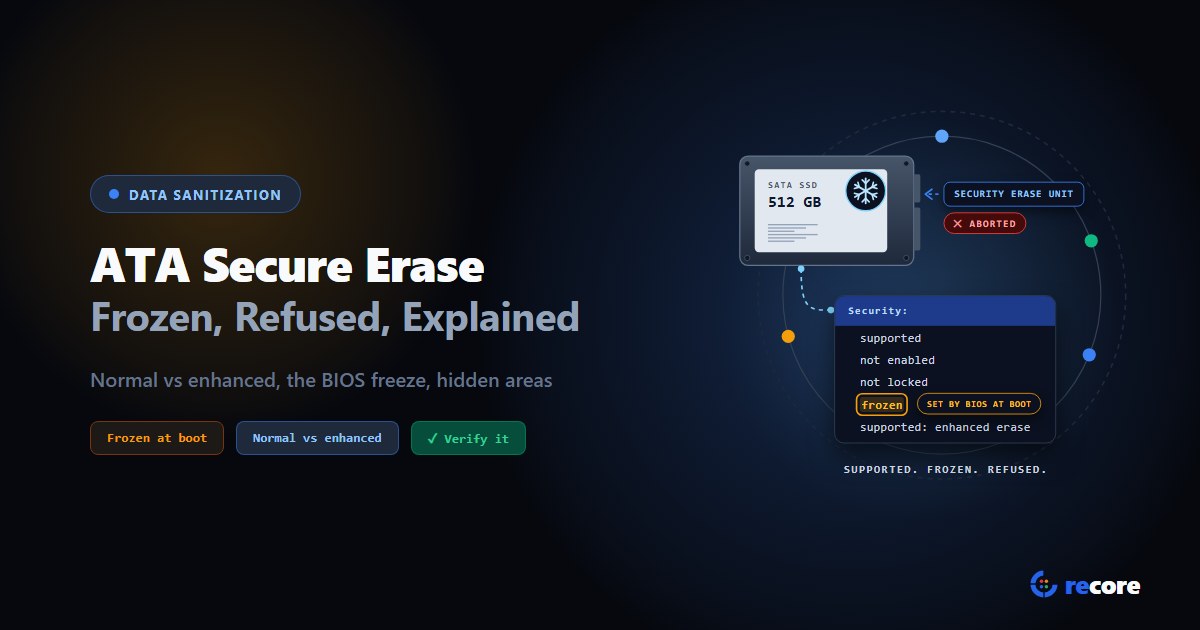
ATA Secure Erase Explained: Normal, Enhanced and Frozen Drives
What ATA Secure Erase does in normal and enhanced mode, why drives show frozen or not supported, what it misses (HPA, DCO), and how to verify it.
Technical deep-dives into NIST SP 800-88, R2v3 audit compliance, NVMe cryptographic erasure, and automated hardware grading.
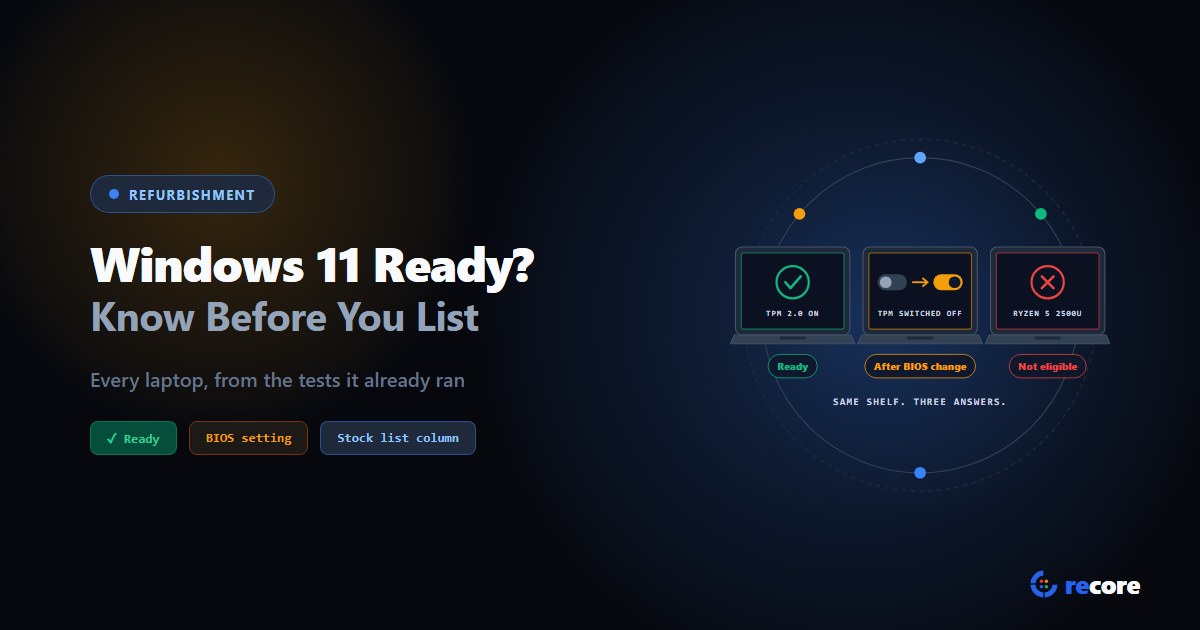
How to tell which used laptops can run Windows 11, which need only a BIOS setting, and which can't, without installing Windows. Plus a free sample stock list.


What ATA Secure Erase does in normal and enhanced mode, why drives show frozen or not supported, what it misses (HPA, DCO), and how to verify it.

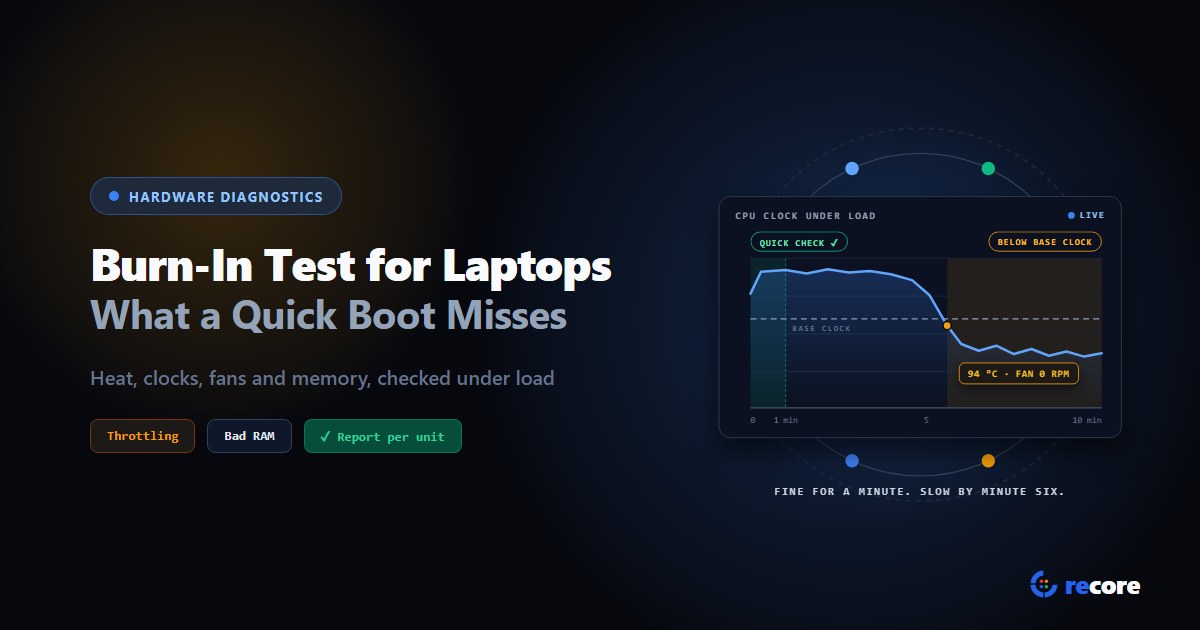
How to burn-in test a used laptop: what a quick boot check misses, how long to run it, what should fail or only warn, and what to log for the buyer.

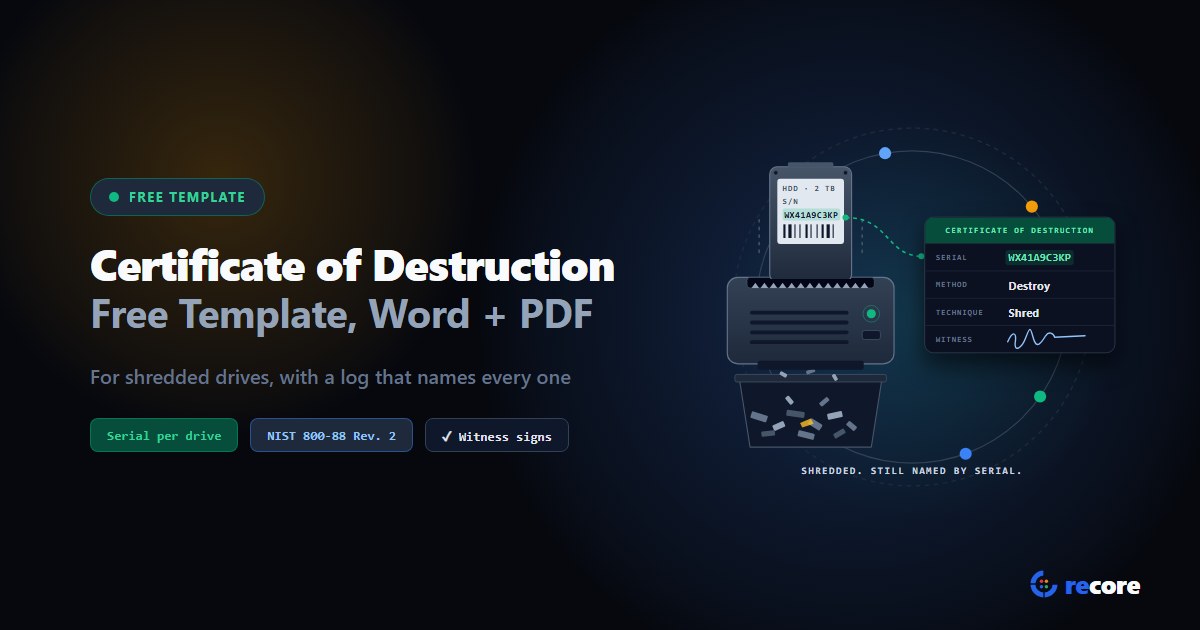
A free certificate of destruction template for hard drives and SSDs, in Word and PDF, with a per-drive log and the fields NIST SP 800-88 Rev. 2 lists.

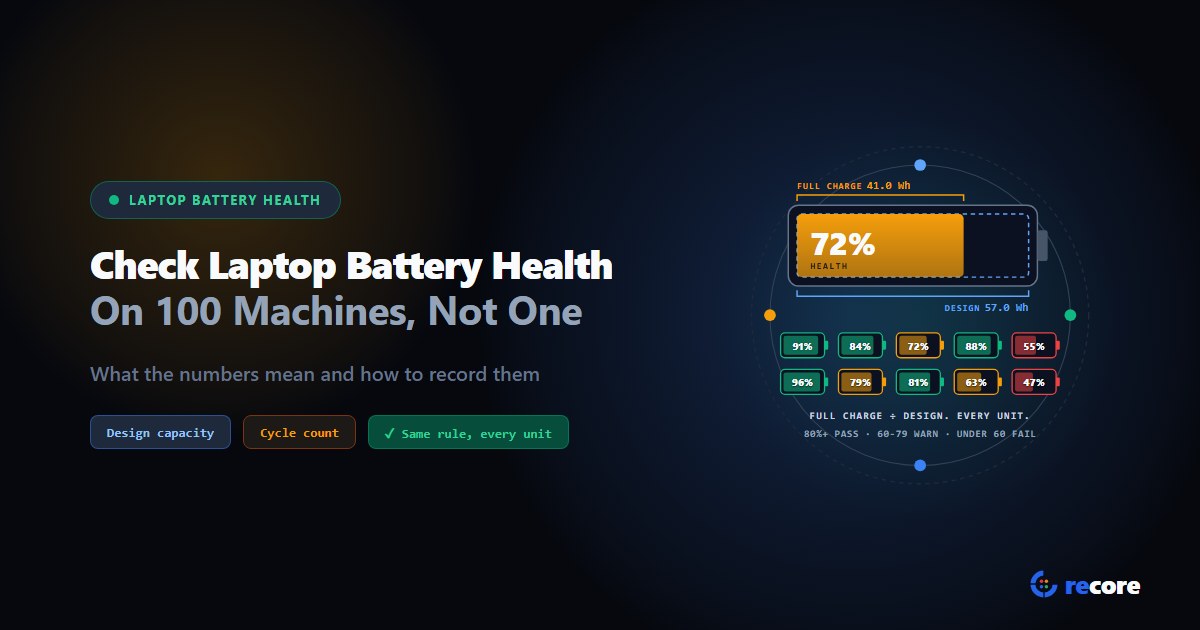
How to check laptop battery health on one machine and on a whole batch: what the numbers mean, when they mislead, and how to record them for a buyer.

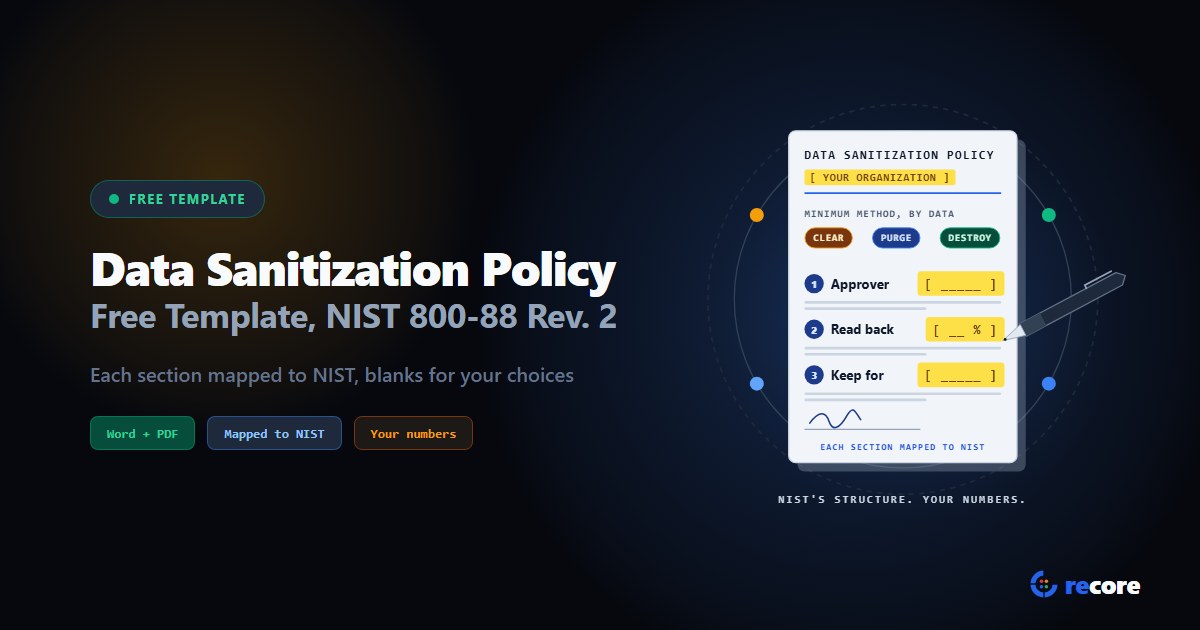
A free data sanitization policy template in Word and PDF, built section by section on NIST SP 800-88 Rev. 2, with blanks for the choices only you can make.

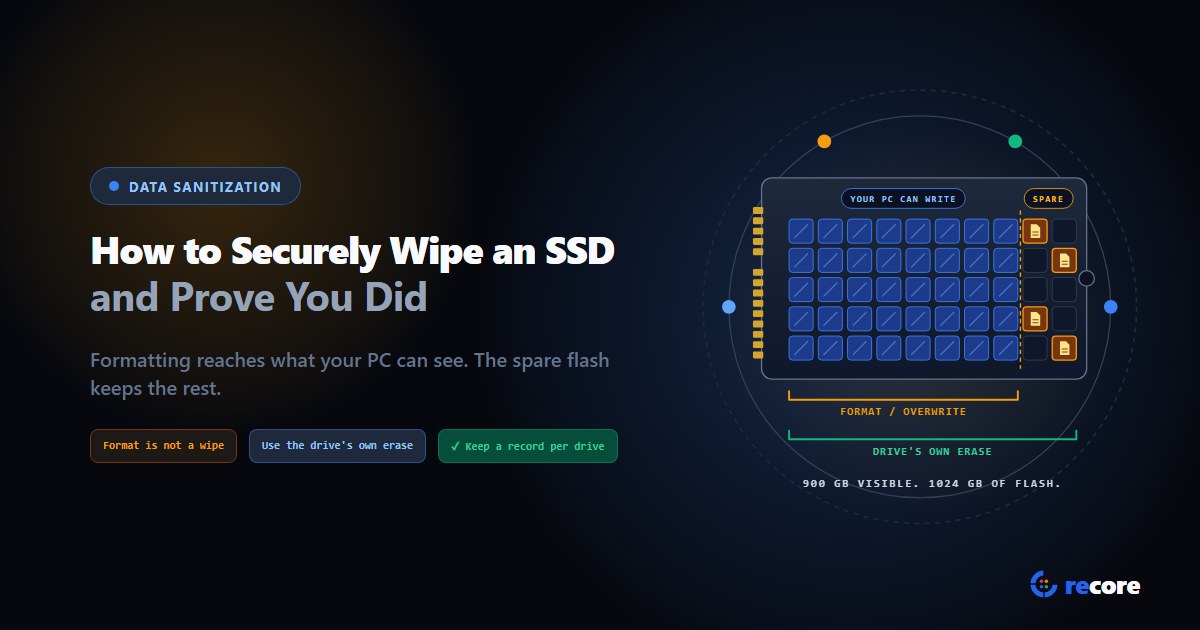
Formatting doesn't wipe an SSD. Which erase command fits SATA, NVMe and self-encrypting drives, how to check it worked, and what record to keep.

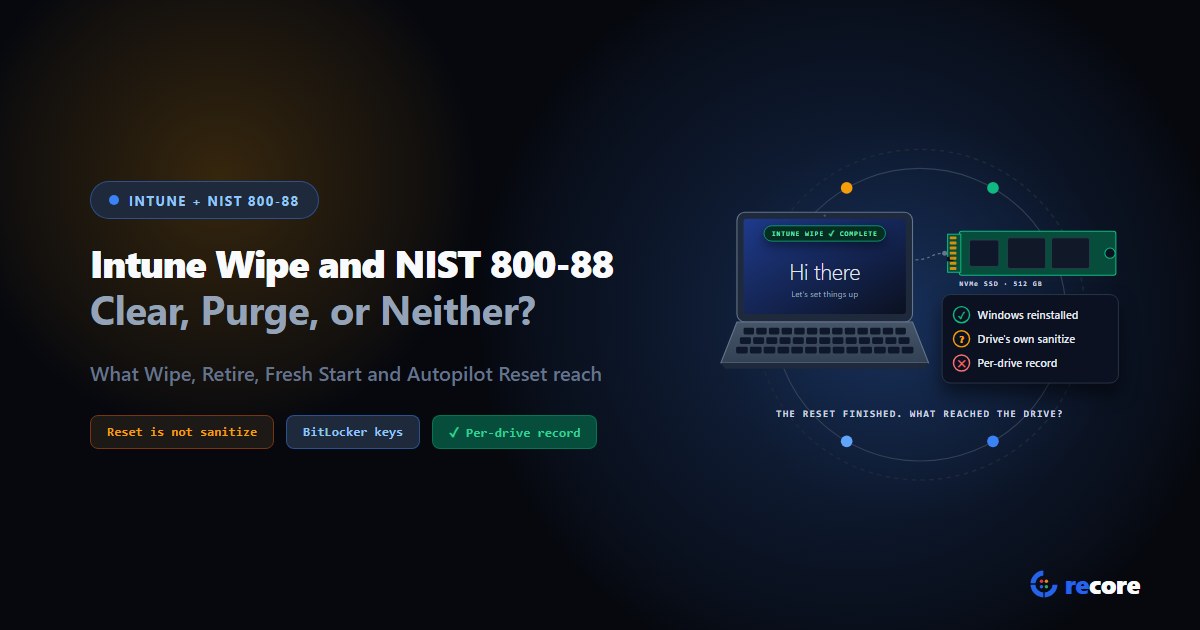
What Intune Wipe, Retire, Fresh Start and Autopilot Reset actually do, how each maps to NIST 800-88 Clear and Purge, and what an auditor gets.

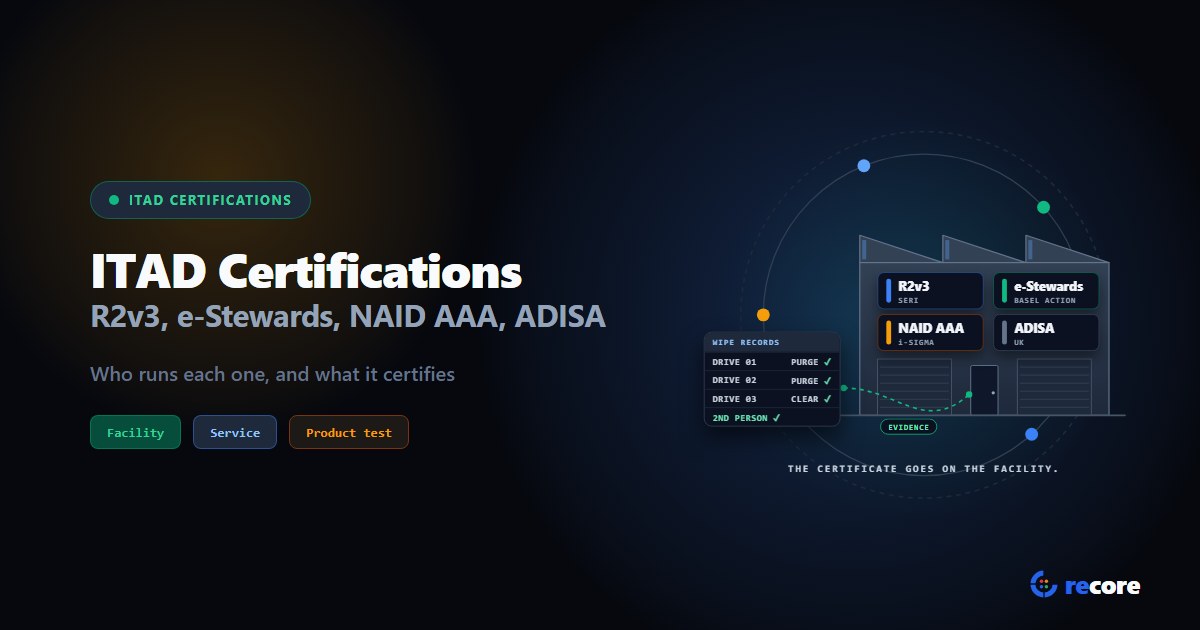
Who runs each ITAD certification, what it certifies (the facility, the service or the software) and what it says about data. One table, sources linked.

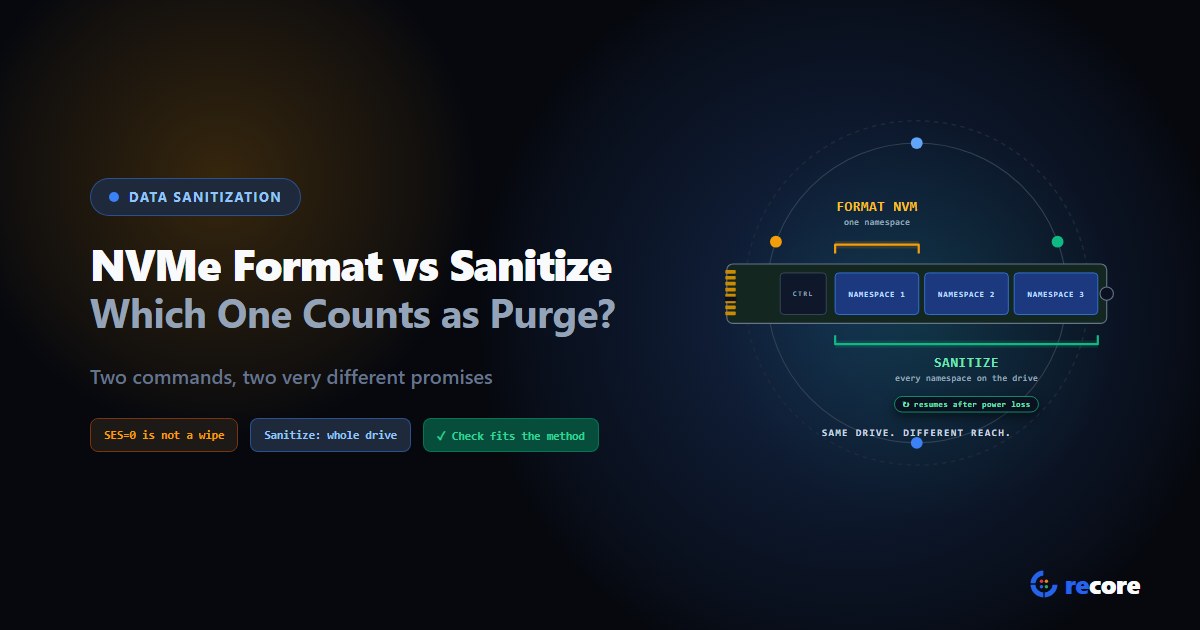
Format NVM with SES=1 or 2, or the Sanitize command? What each one erases, which counts as NIST Purge, and how to verify it, from the NVMe spec itself.

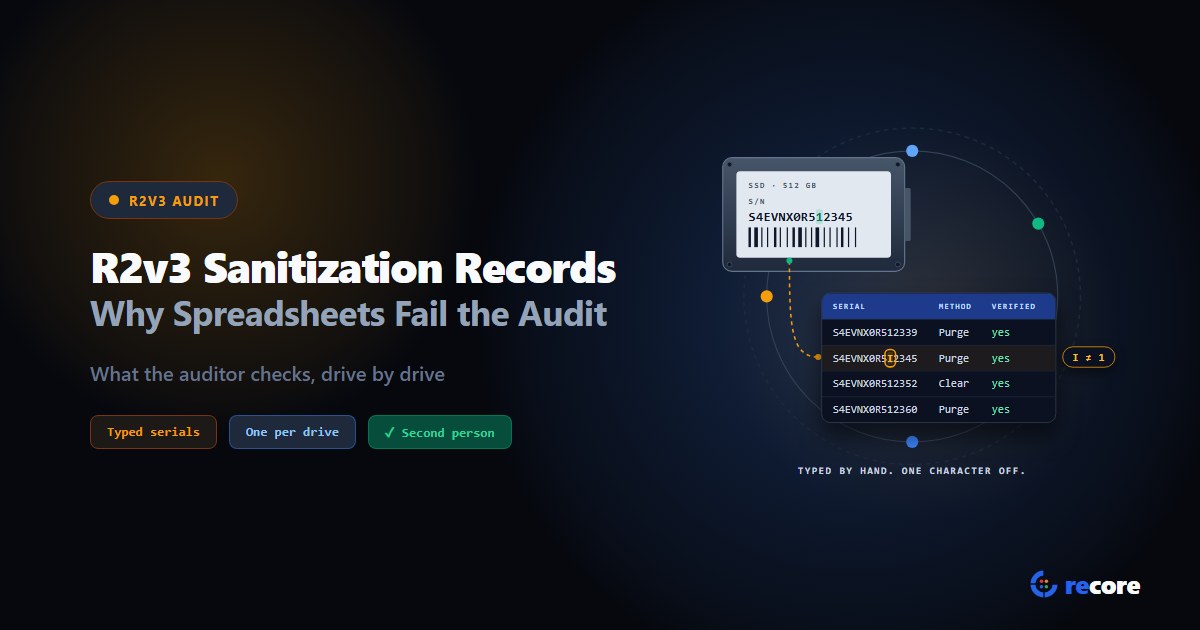
What an R2v3 auditor checks in your sanitization records, why SERI won't accept operator spreadsheets, and the fields each drive's record should hold.

How to tell which used laptops can run Windows 11, which need only a BIOS setting, and which can't, without installing Windows. Plus a free sample stock list.

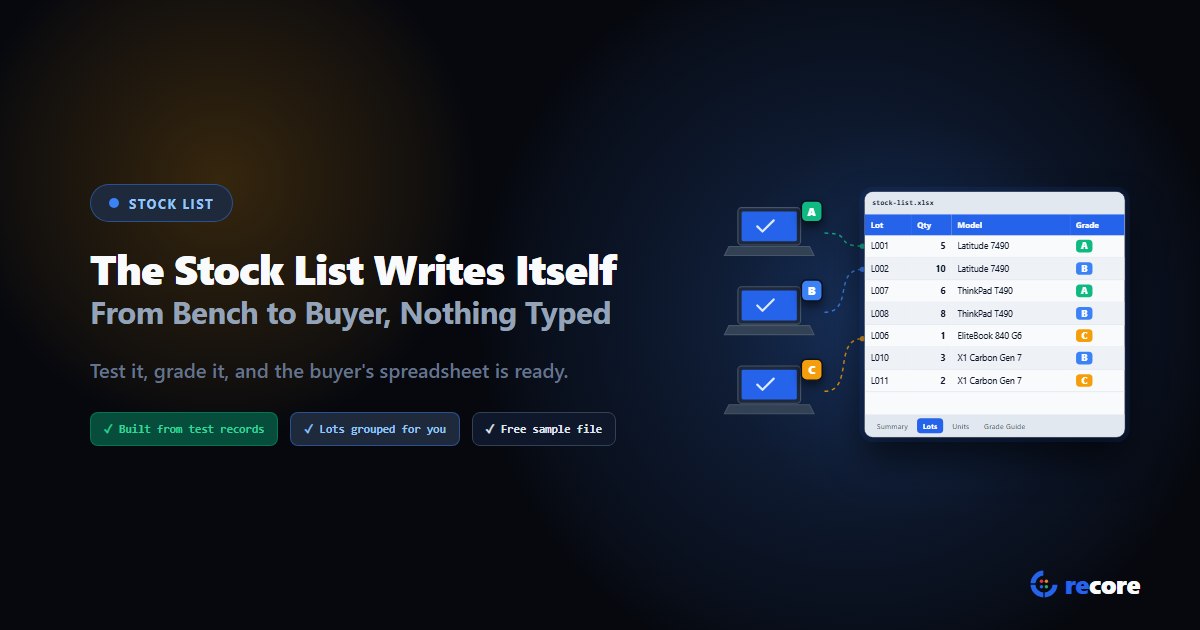
What a buyer needs on a refurbished laptop stock list, why hand-typed lists cost you credits, and how reCore builds one from test records. Free sample file.

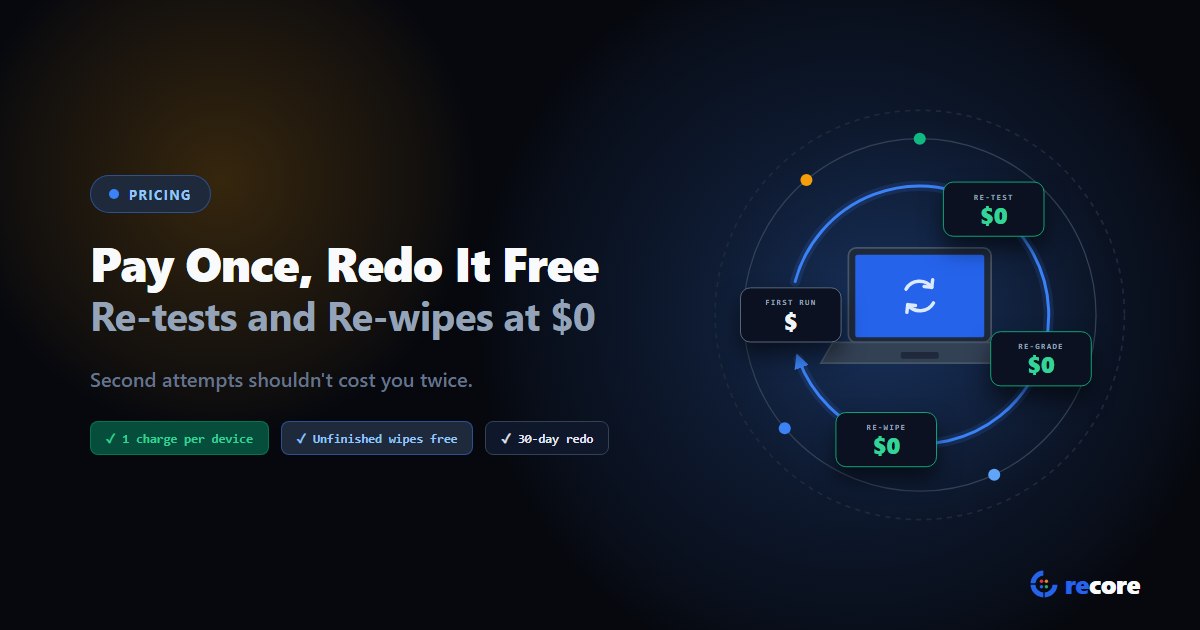
Re-tests, re-grades and re-wipes are half the work on a refurbishing floor. In reCore you pay once per device and once per drive, and redo it free for 30 days.

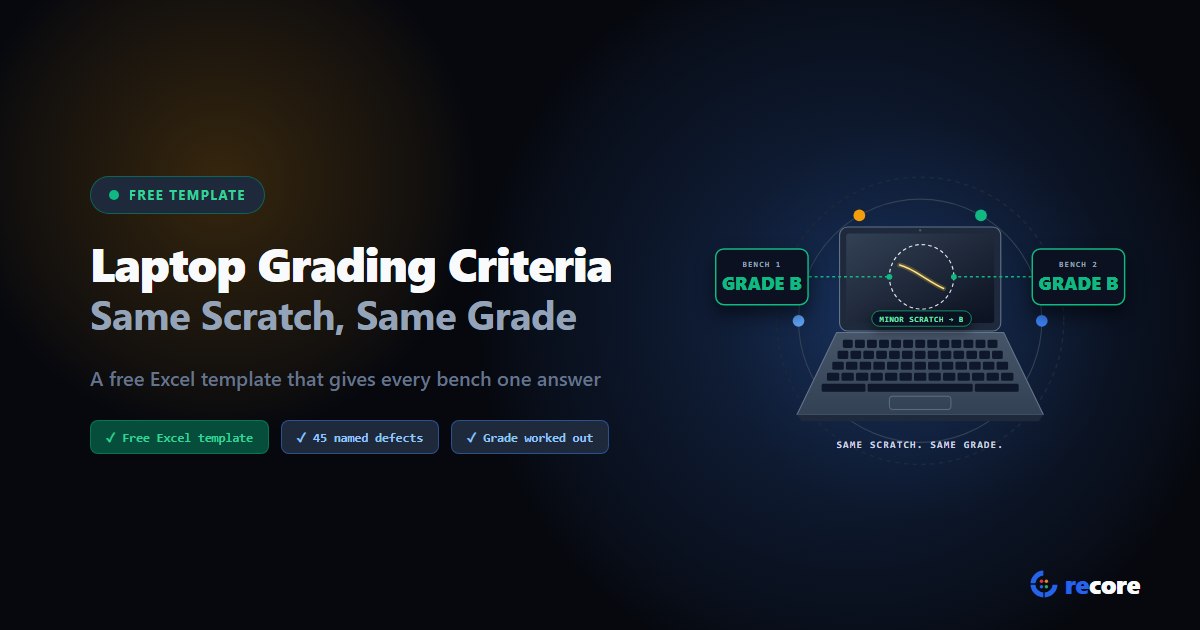
Free laptop grading criteria template: 45 defects across 7 parts, the rules that turn them into A, B, C, D or For parts, and an Excel sheet that works out the grade.

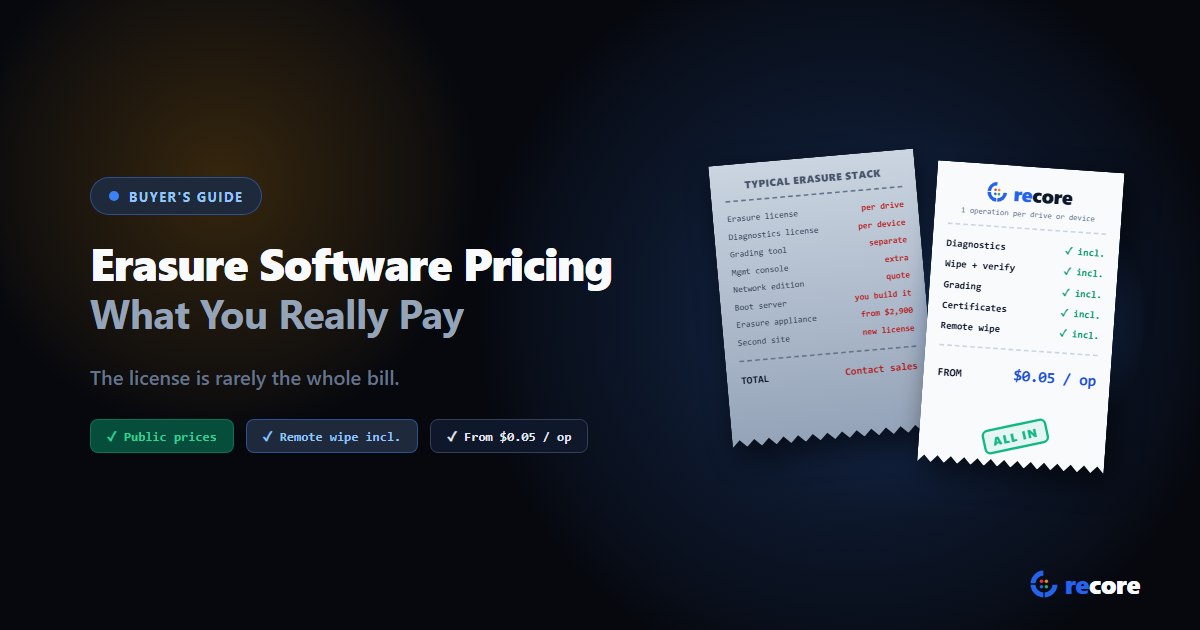
Data erasure software is sold per drive, per slot, per site, by subscription or as hardware. What each model really costs, the hidden extras, and reCore's prices.

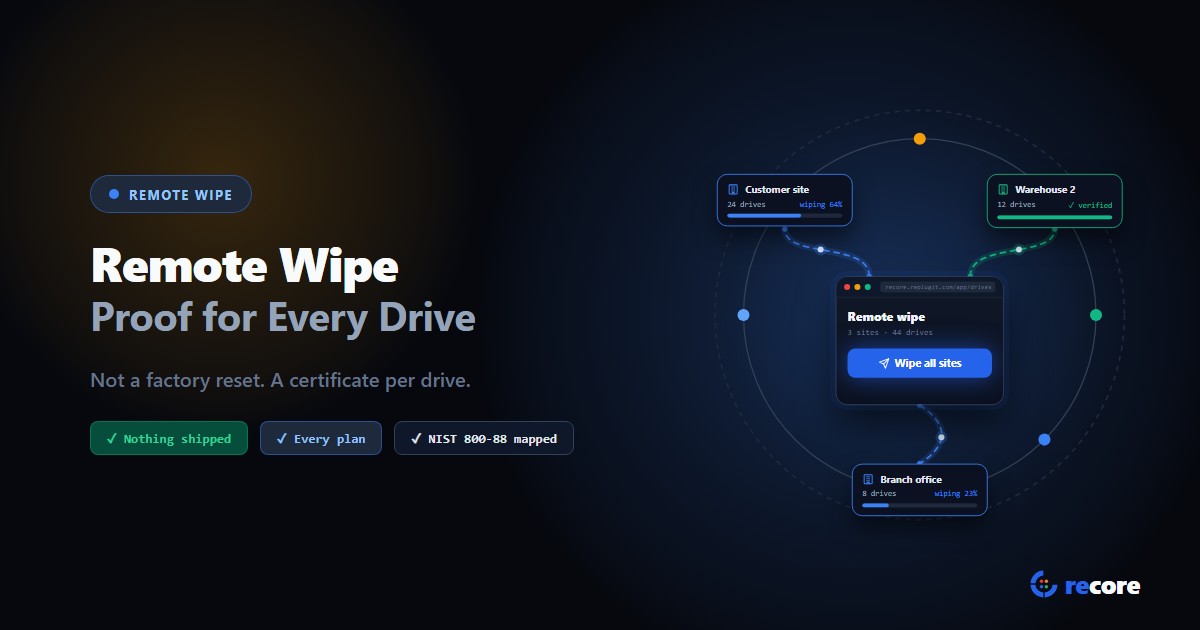
What remote wipe means, why an MDM remote wipe isn't data erasure, and how to erase laptops remotely with a certificate per drive. No server, no appliance.

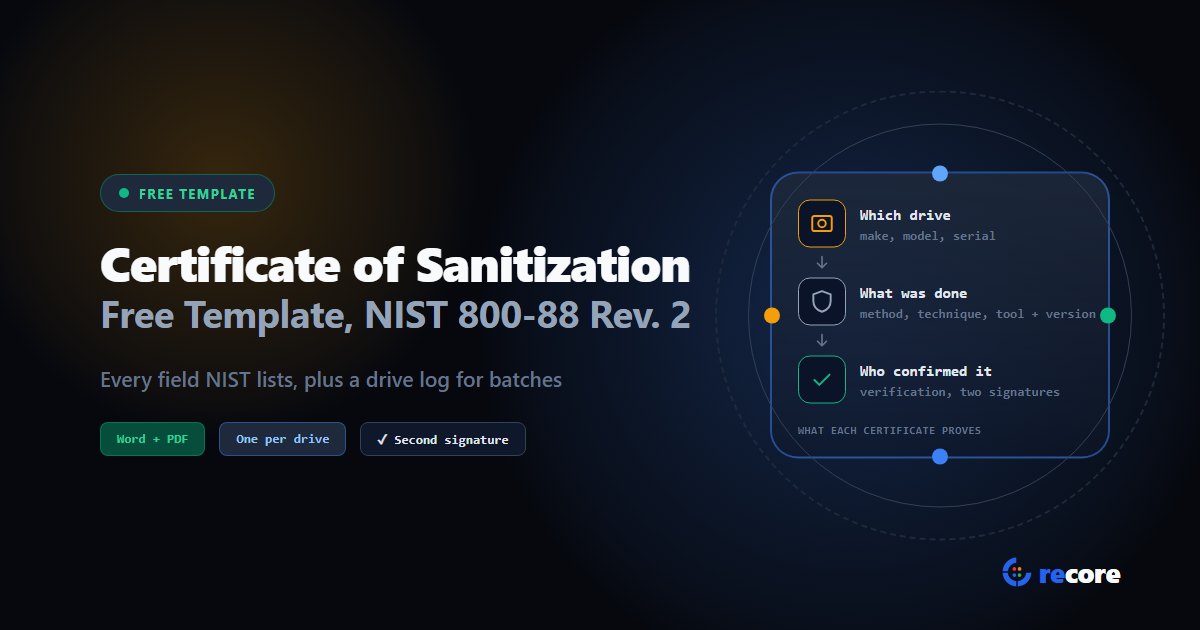
A free certificate of sanitization template in Word and PDF, with every field NIST SP 800-88 Rev. 2 lists, a drive log for batches, and how to fill it in.

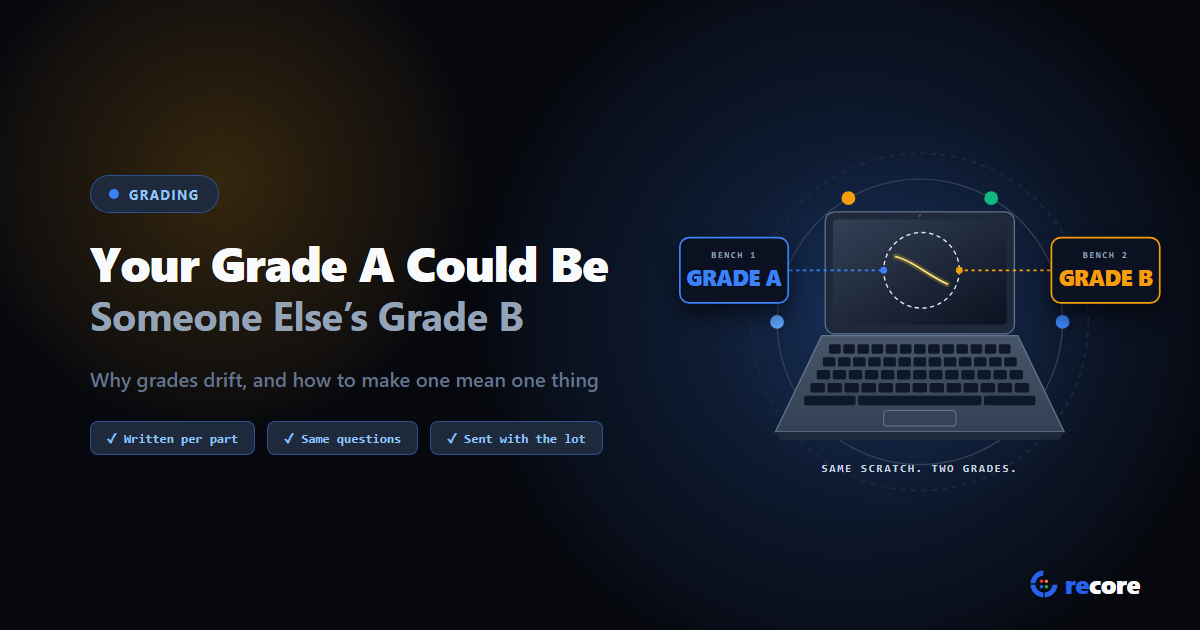
No common grading scale exists for used laptops, and one floor can grade the same scratch two ways. Why grades drift, and how to make one mean one thing.

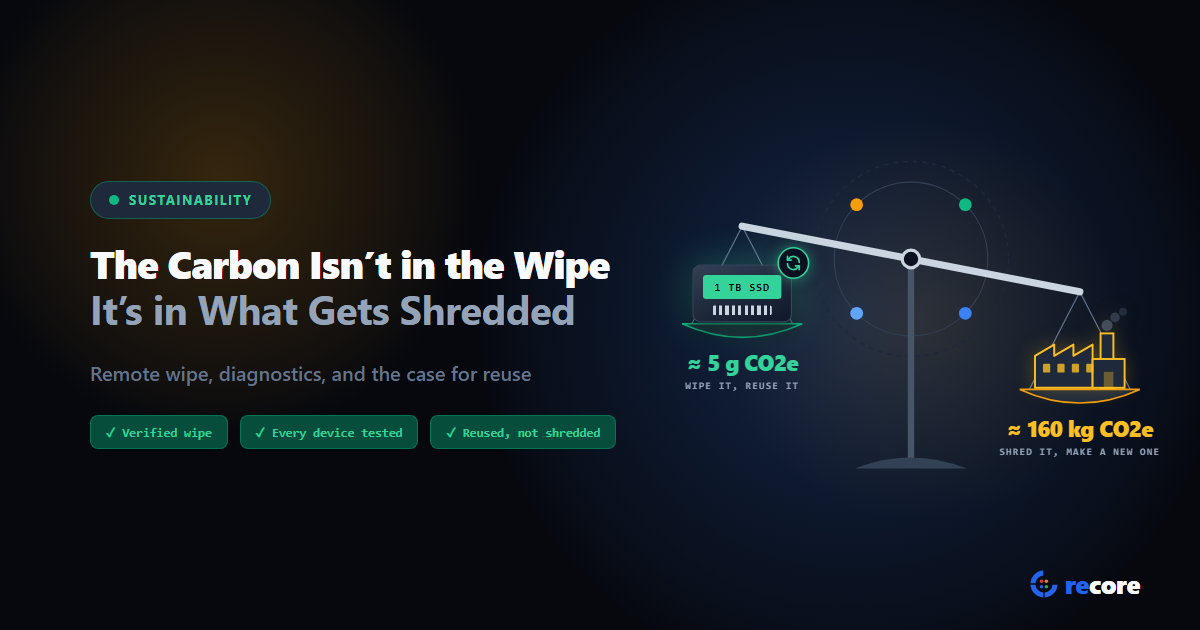
A wipe costs grams of CO2e; a new 1 TB SSD about 160 kg. Where ITAD's carbon really sits, and how remote wipe and diagnostics push devices to reuse.

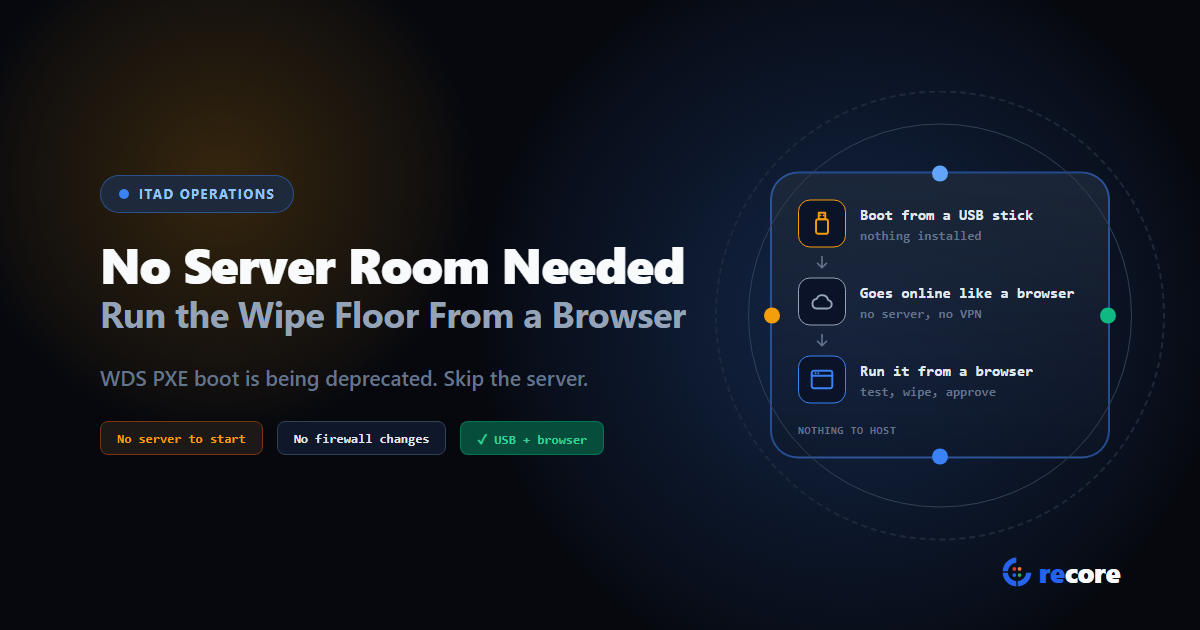
Microsoft is deprecating WDS, the PXE server in Windows Server. What it means for network-boot wipe floors, and how reCore runs from USB and a browser.

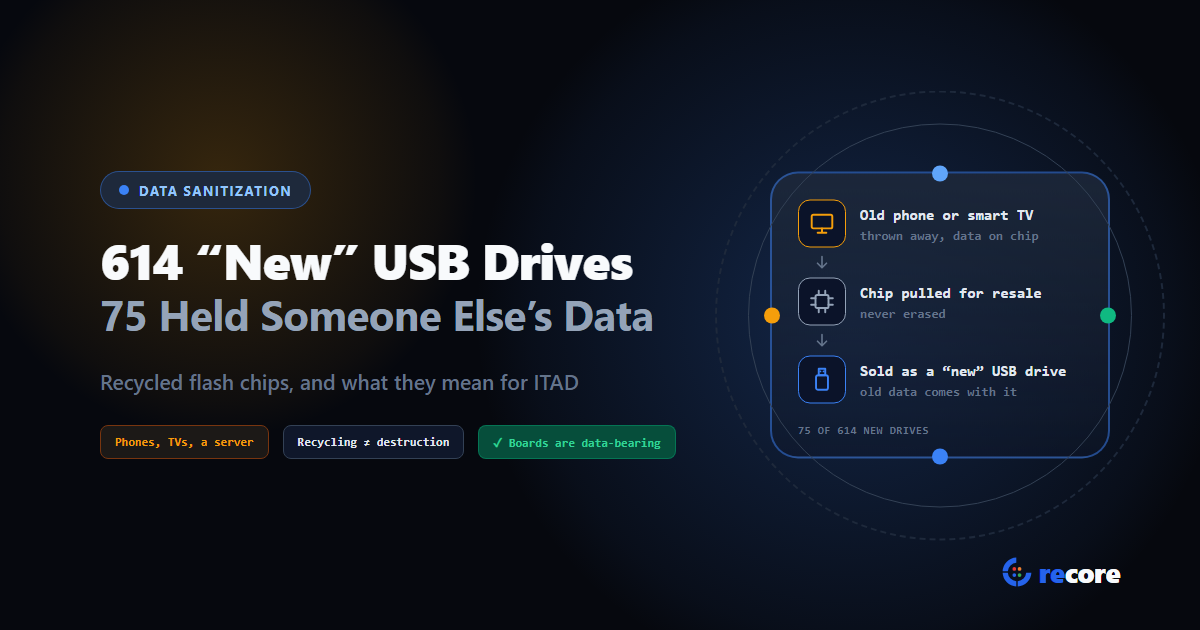
75 of 614 new USB drives held other people's photos and documents, from chips recycled out of phones, TVs, printers and a server. What it means for ITAD.

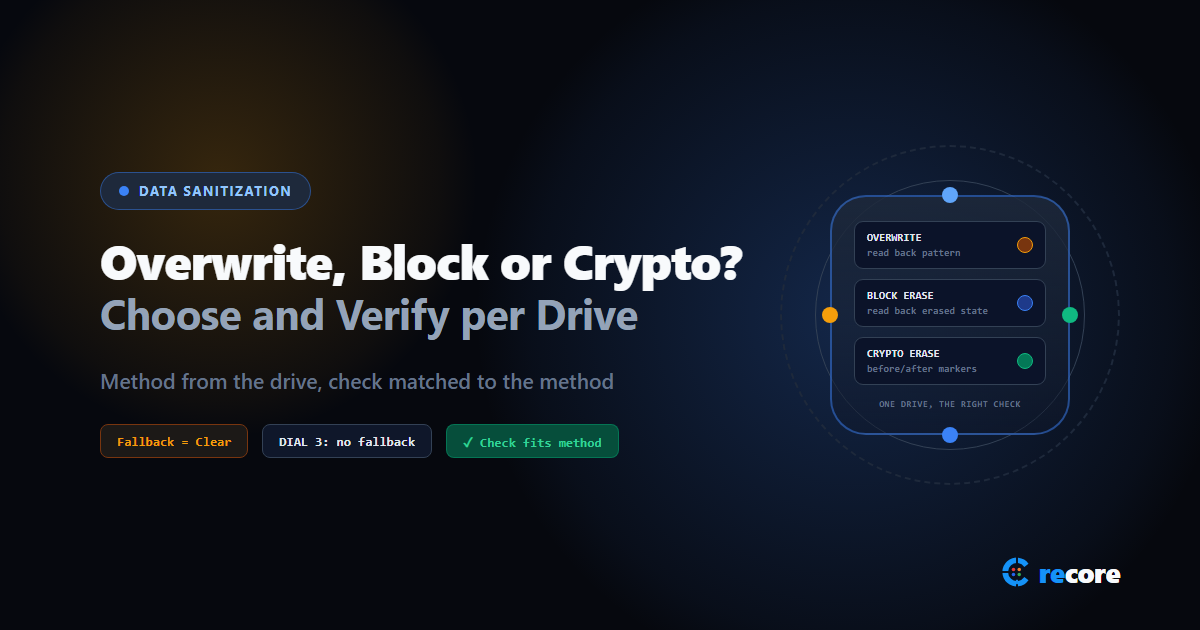
The right wipe method depends on what each drive supports, and each needs a different check. How to choose per drive, and how to verify a purge.

NIST, ADISA, IEEE 2883 and R2v3 each set a different verification number, and two of them don't measure the same thing. What each requires, and how to choose.

NIST SP 800-88 Rev. 2 advises against shredding modern storage except for low-sensitivity data. What SSD reuse needs, and the contract terms to agree.

HP sold 16% fewer PCs while revenue rose 18%, and memory prices hit records. What that means for ITAD intake, RAM and SSD reuse.

NIST SP 800-88 Rev. 2 moves the focus from wipe techniques to sanitization programs, verification, validation and records. What an ITAD record should prove.

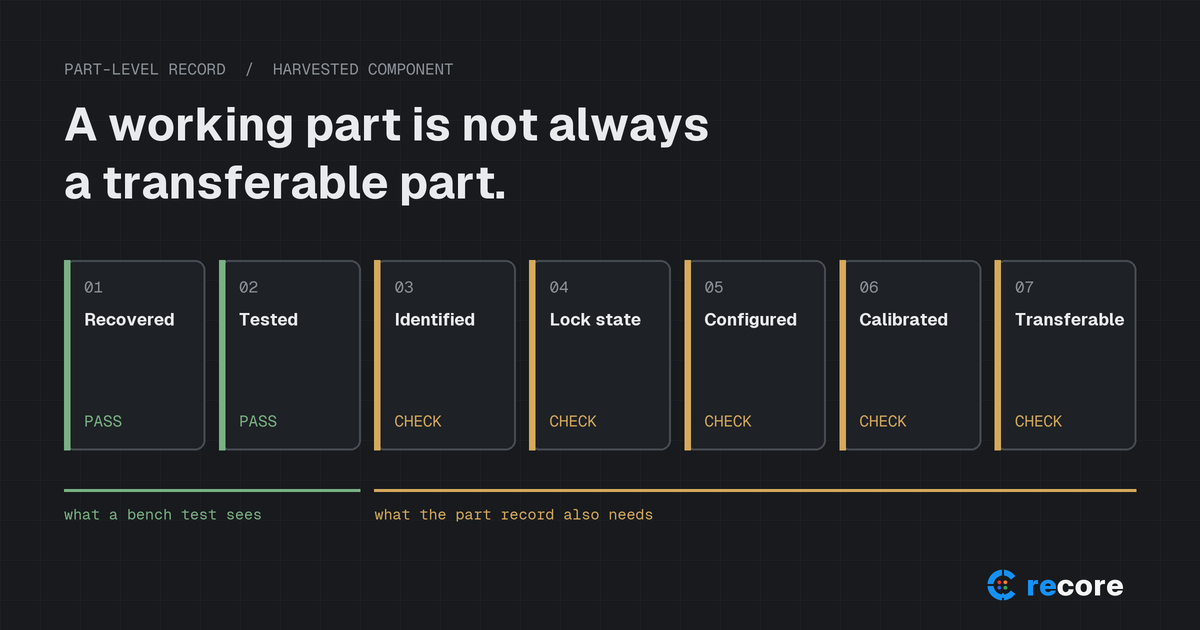
Apple's part-level Activation Lock and Repair Assistant change how refurbishers should test, grade and document used iPhone and iPad components.

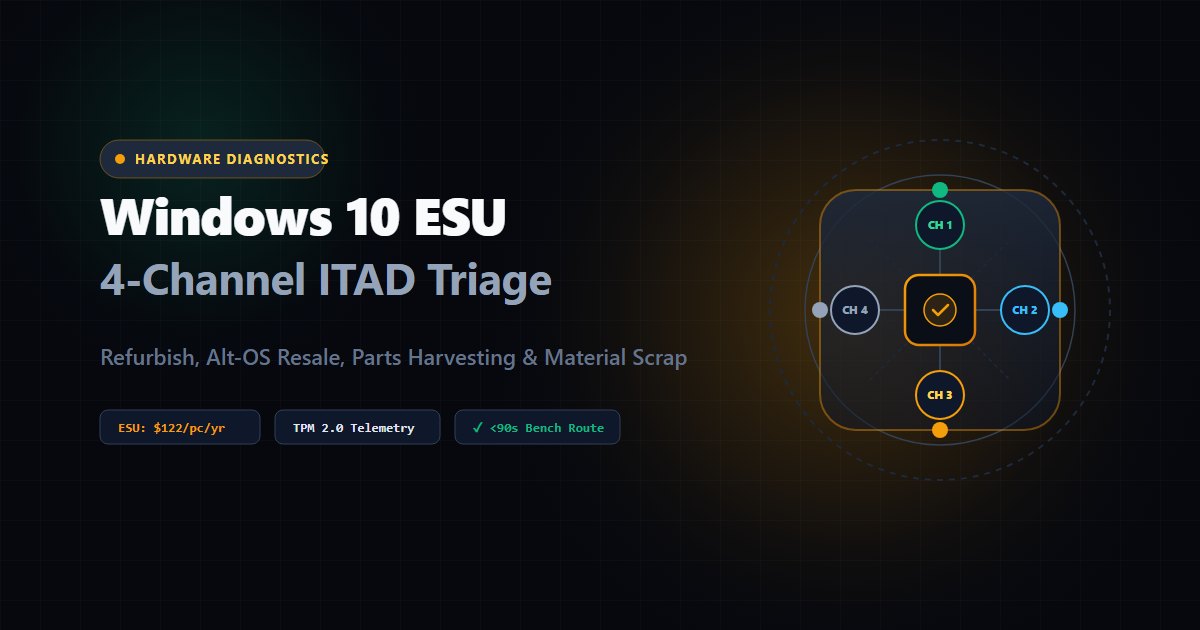
Windows 10 ESU costs double in Year 2. How ITADs use automated hardware diagnostics to triage off-lease fleets into four sales channels.

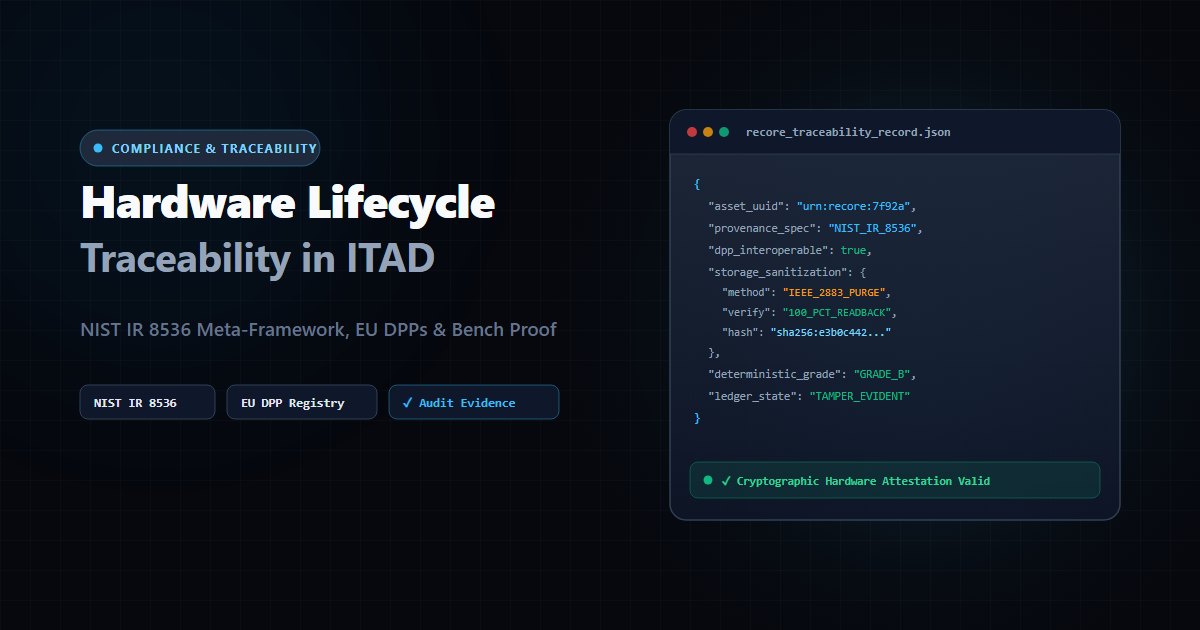
How NIST IR 8536 and the EU Digital Product Passport turn ITAD from inventory tracking into verifiable hardware lifecycle traceability.

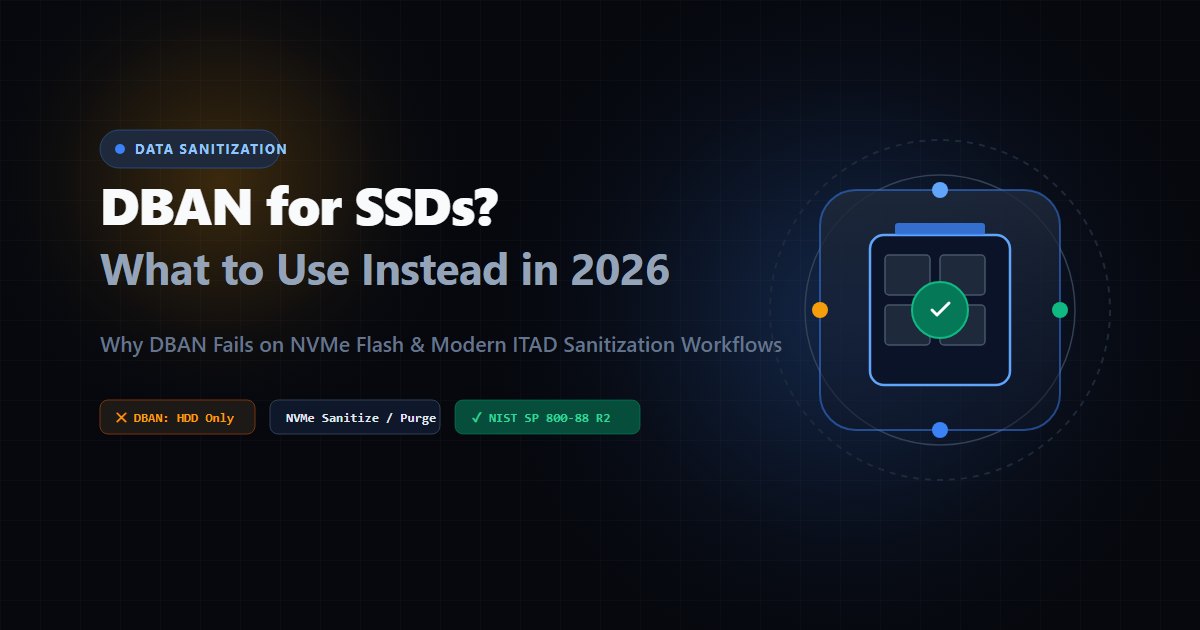
Can DBAN wipe an SSD? Learn why DBAN is designed for HDDs, how SSD and NVMe sanitization works, and what to use instead.

Is DoD 5220.22-M still a valid wipe standard? No: the manual became a federal rule in 2021 and never fit SSDs. What NIST 800-88 Rev. 2 asks for instead.

Step-by-step R2v3 data sanitization audit process guide for ITADs. Master the 5% independent QA sampling rule, separation of duties, and software compliance.

What to measure on a used laptop battery, why short boot tests miss faults, and which checks belong in a refurbishing batch.

Why R2v3 auditors and risk teams reject bulk destruction receipts, and how serial-level records with SHA-256 hashes hold up instead.

With accelerated compute lifecycles compressed to 18-36 months, GPU nodes lose 40% of value in 60 days. Learn modern NVMe 2.0 sanitization and thermal triage.

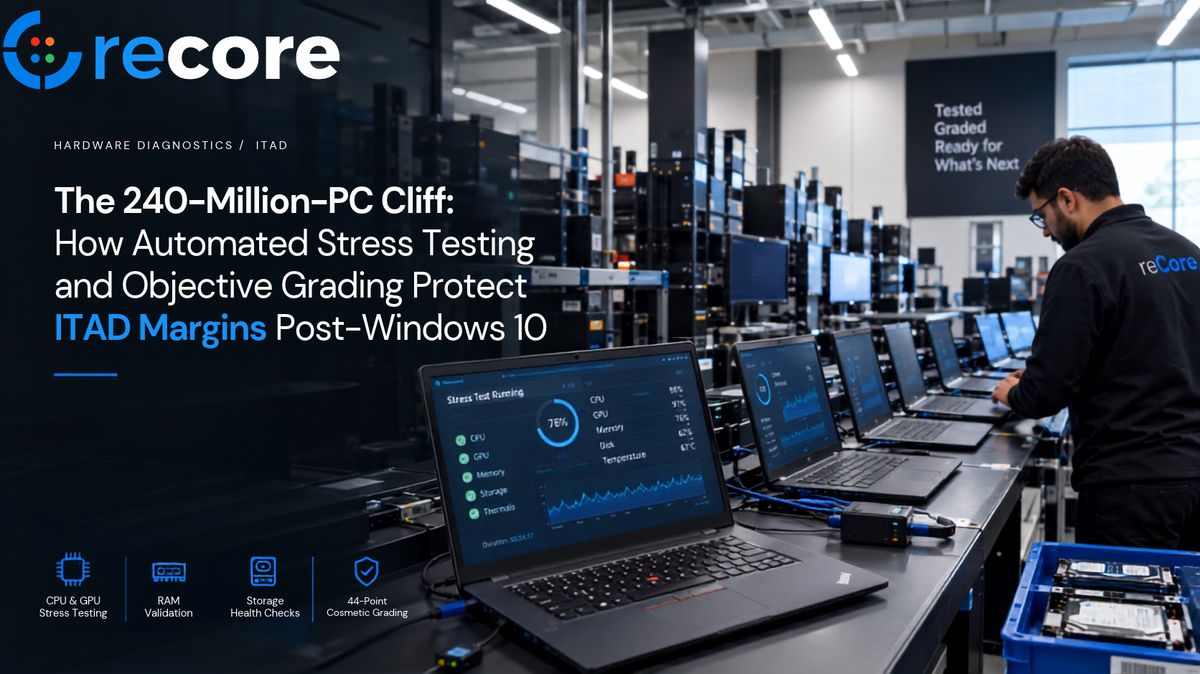
Windows 10 end of life is driving a PC refresh wave. How ITADs use automated diagnostics, sanitization and grading to process more devices.

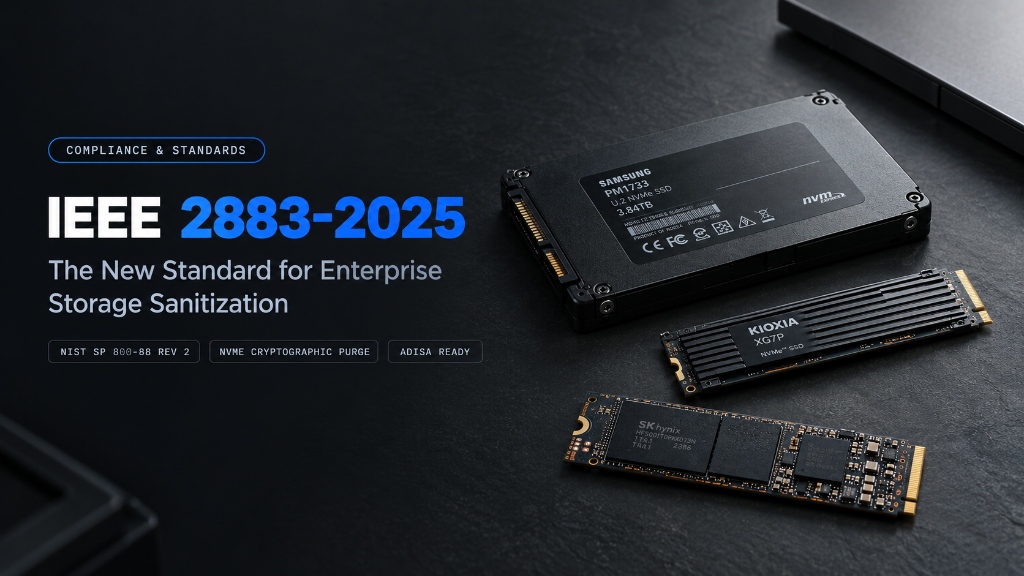
Compare IEEE Std 2883-2022 vs NIST SP 800-88 Rev 2. Understand Clear, Purge, and Crypto Erase on NVMe SSDs, plus audit compliance and ADISA verification.
Join enterprise IT managers and electronics refurbishers receiving our monthly technical standards breakdowns, NIST/R2v3 audit tips, and benchmark releases.