The R2v3 Appendix B Data Sanitization Audit Checklist for ITADs
A comprehensive compliance roadmap for electronics recyclers and ITAD facilities preparing for SERI R2v3 Appendix B data sanitization audits.
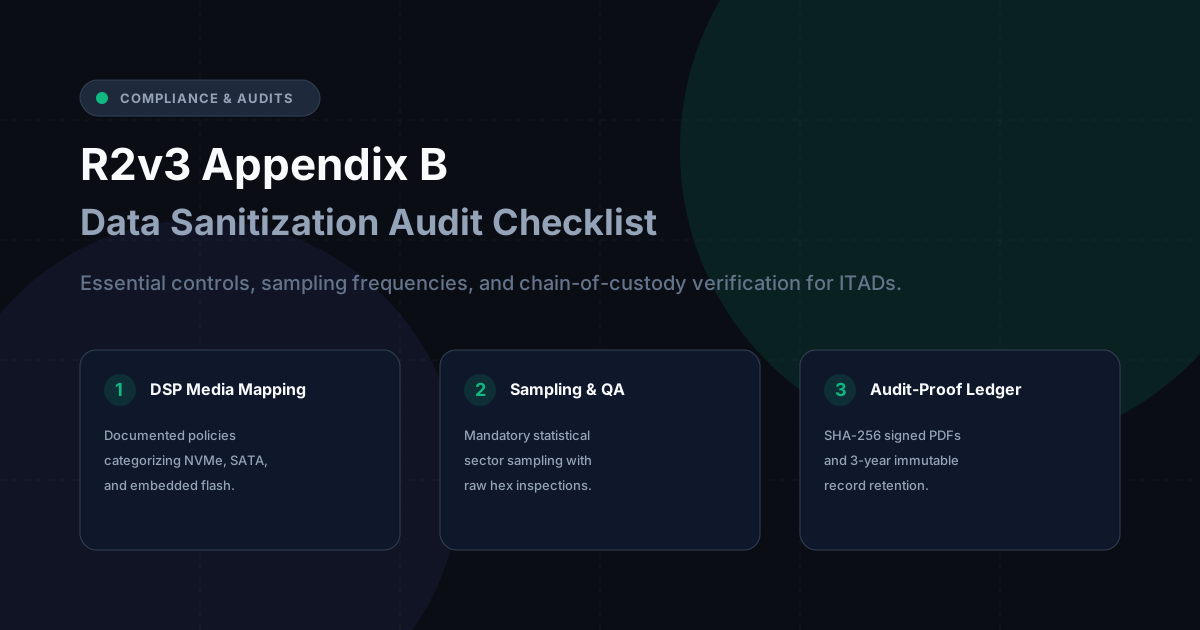
The Sustainable Electronics Recycling International (SERI) R2v3 standard is the global benchmark for responsible electronics recycling and reuse. Among its specialized Process Requirements, Appendix B (Data Sanitization) establishes stringent mandates for data destruction, chain of custody, and downstream tracking.
Facilities undergoing an initial R2v3 certification or annual surveillance audit frequently encounter non-conformances due to gaps in software verification, sampling frequency, or unvalidated physical security controls.
This guide provides an actionable technical checklist for electronics recyclers, refurbishers, and ITAD operations.
Key Pillars of R2v3 Appendix B Compliance
Under R2v3 Core Requirement 7 and Appendix B, certified facilities must prove compliance across four critical operational domains:
┌─────────────────────────────────────────────────────────────────────────────┐
│                       R2v3 APPENDIX B COMPLIANCE PILLARS                    │
├─────────────────────────────────────────────────────────────────────────────┤
│ 1. Data Sanitization Plan (DSP) │ Documented policies matching media types  │
│ 2. Software Validation          │ Independent ADISA or NIST verification    │
│ 3. Quality Controls & Sampling  │ Statistically valid post-wipe sampling    │
│ 4. Chain of Custody & Records   │ Tamper-proof certificates kept 3+ years   │
└─────────────────────────────────────────────────────────────────────────────┘
1. The Data Sanitization Plan (DSP)
Auditors begin every review by examining your organization’s Data Sanitization Plan. Your DSP must explicitly detail:
- Categorization by Media Type: Dedicated procedures for magnetic spinning hard drives, NVMe/SATA SSDs, embedded flash (eMMC, UFS), mobile devices, and network switch ROMs.
- Defined Sanitization Levels: Mapping each equipment category to either logical sanitization (NIST Clear), firmware destruction (NIST Purge), or physical destruction (NIST Destroy).
- Quarantine Protocols: Secure locked staging areas for inbound data-bearing media awaiting sanitization.
Auditors will test whether your team attempts to wipe locked Chromebooks, iCloud/MDM-locked Apple devices, or BIOS-locked enterprise laptops. Your DSP must specify escalation paths for locked devices.
2. Verification of Data Sanitization Software
R2v3 Appendix B requires that all automated data erasure software tools be validated to effectively overwrite or cryptographically purge all storage locations.
To satisfy auditor inquiries:
- Software must maintain independent certification (such as ADISA validation or NIST SP 800-88 conformance).
- The tool must detect and report unallocated space, Host Protected Areas (HPA), Device Configuration Overlays (DCO), and hidden remapped NAND flash blocks.
- Automated device serial number capture must originate directly from the drive firmware controller, not manual human entry.
3. Sampling Rates and Quality Control
Section B.(2) mandates an ongoing quality control process to verify that sanitization was 100% effective.
| Facility Volume (Monthly Units) | Minimum Quality Control Sampling Rate | | :--- | :--- | | < 1,000 drives | 100% verification or 10% statistical batch sampling | | 1,000 – 10,000 drives | Minimum 5% independent sampling with hex sector inspection | | > 10,000 drives | Automated programmatic 100% sector verification verification |
Sector Verification Pattern:
[0x000000] 00 00 00 00 00 00 00 00  (Passed - Zero Filled)
[0x000008] 00 00 00 00 00 00 00 00  (Passed - Zero Filled)
4. Immutable Records and Chain of Custody
R2v3 requires retaining detailed data sanitization records for a minimum of three (3) years. Every certificate issued must tie directly to the unique parent asset ID, drive serial number, technician PIN, and verification timestamp.
reCore centralizes your entire R2v3 audit log into an immutable cloud database, enabling instant multi-sheet Excel and PDF batch exports during auditor inspections.
Preparing for Your Next Surveillance Audit
- Conduct internal blind sampling: Pull 20 wiped drives from finished goods storage and inspect sectors with raw hex utilities.
- Review separation of duties: Ensure the operator executing the wipe is not the same user digitally certifying the certificate.
- Verify certificate hash integrity: Validate that SHA-256 verification hashes are present on every generated PDF.
Automate NIST SP 800-88 & R2v3 Compliance
Deploy reCore across hundreds of devices simultaneously with zero-touch PXE or USB boot. Generate SHA-256 verified PDF erasure certificates with separation of duties enforcement.
Related Guides & Articles
Continue exploring compliance standards and hardware diagnostics.
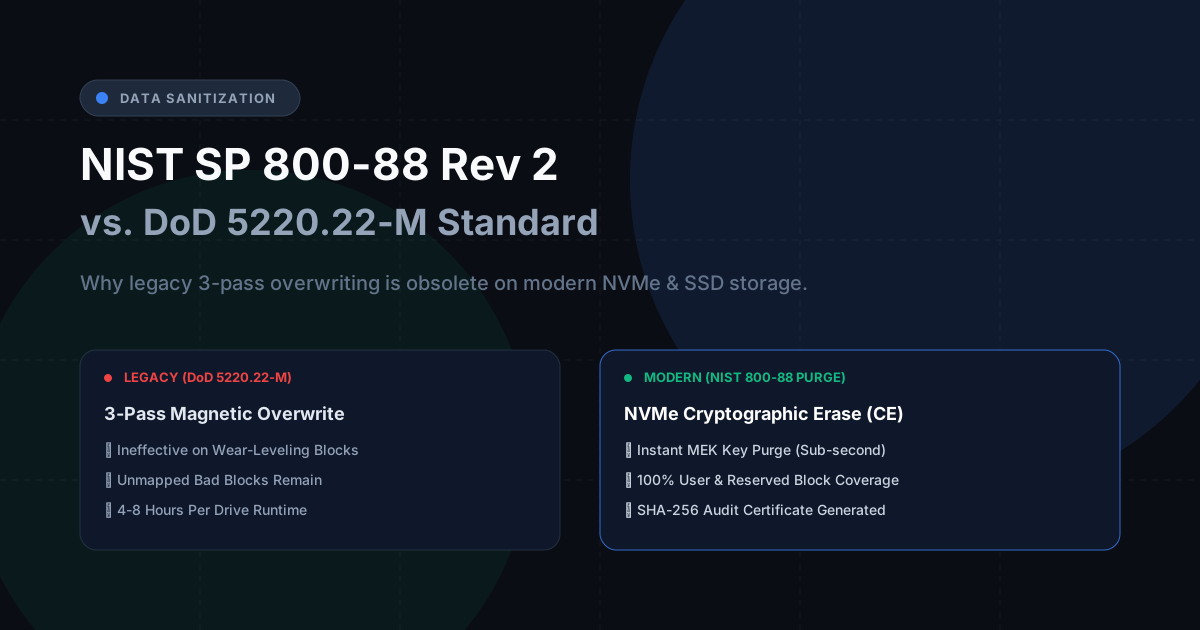
NIST SP 800-88 Rev 2 vs. DoD 5220.22-M: The Modern ITAD Sanitization Guide
Why the legacy DoD 5220.22-M 3-pass standard is obsolete on modern flash media and how NIST SP 800-88 Clear vs. Purge fulfills enterprise ITAD compliance.
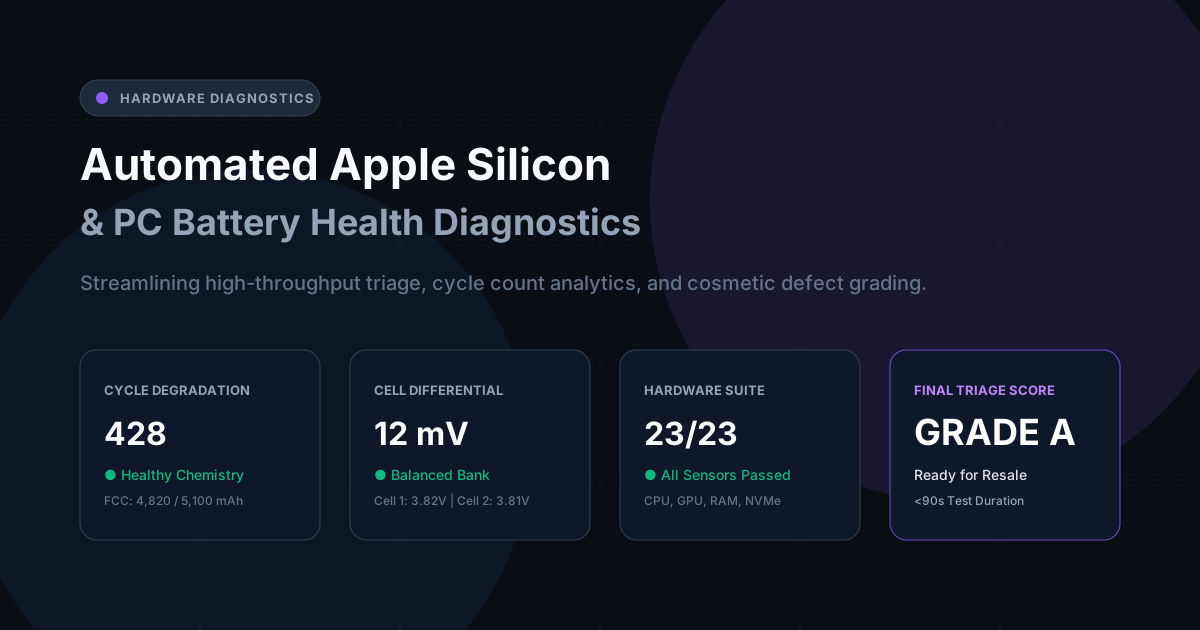
Automated Apple Silicon & PC Battery Health Diagnostics in Refurbishing Batches
How automated hardware diagnostics, cycle count tracking, and battery health degradation algorithms streamline triage for high-volume ITAD processors.
Stay Ahead in Data Sanitization & ITAD Compliance
Join enterprise IT managers and electronics refurbishers receiving our monthly technical standards breakdowns, NIST/R2v3 audit tips, and benchmark releases.