NIST SP 800-88 Rev 2 vs. DoD 5220.22-M: The Modern ITAD Sanitization Guide
Why the legacy DoD 5220.22-M 3-pass standard is obsolete on modern flash media and how NIST SP 800-88 Clear vs. Purge fulfills enterprise ITAD compliance.
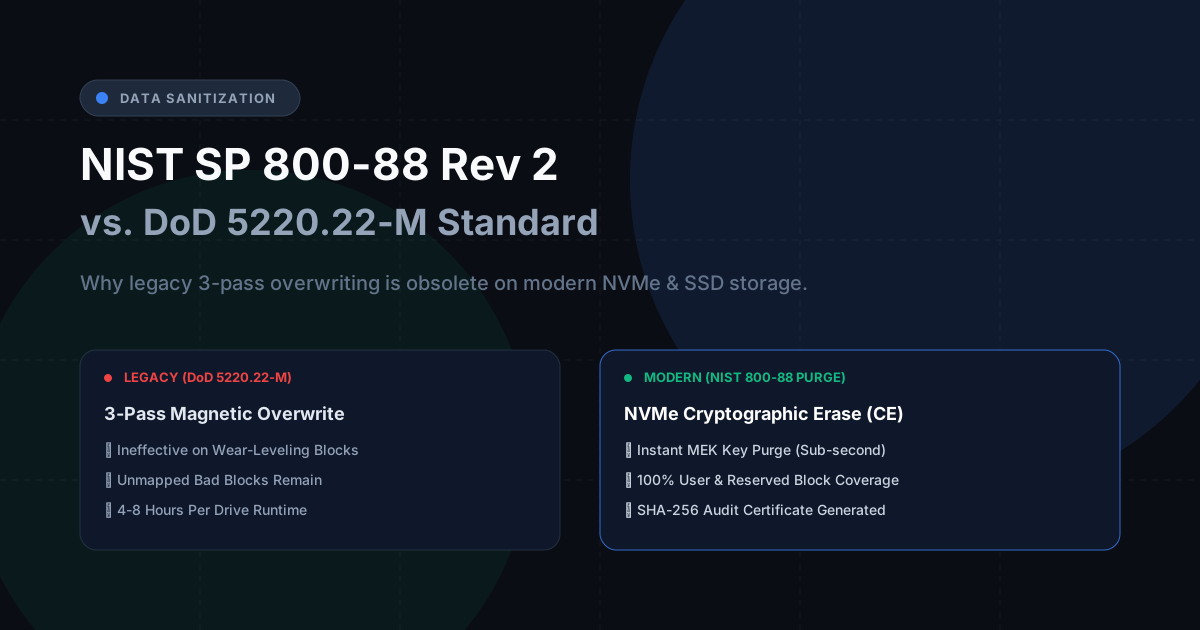
For decades, the Department of Defense (DoD) 5220.22-M specification was the undisputed gold standard for media sanitization across enterprise IT and government contractors. Originally published in 1995 for spinning magnetic hard disk drives (HDDs), it specified overwriting sectors with a 3-pass sequence (zeros, ones, and a pseudorandom character) followed by verification.
However, as enterprise IT environments shifted to Solid-State Drives (SSDs), NVMe storage, and Self-Encrypting Drives (SEDs), the Department of Defense formally discontinued specifying DoD 5220.22-M as an approved erasure standard for flash storage.
Today, NIST SP 800-88 Rev 2 ("Guidelines for Media Sanitization") published by the National Institute of Standards and Technology is the globally accepted framework recognized by R2v3, e-Stewards, ADISA, NAID, and HIPAA auditors.
The U.S. Defense Counterintelligence and Security Agency (DCSA) no longer approves DoD 5220.22-M overwriting for SSD media. Utilizing multi-pass overwrites on modern flash drives causes premature wear-leveling degradation without guaranteeing the destruction of unmapped overprovisioned blocks.
Why DoD 5220.22-M Fails on Modern SSDs
Magnetic hard drives write data linearly to physical tracks and sectors. Overwriting block 10,000 directly modifies block 10,000.
Solid-State Drives operate on fundamentally different physics:
- Flash Translation Layer (FTL) Abstraction: The operating system sees Logical Block Addresses (LBAs), but the internal SSD controller remaps writes dynamically across raw NAND flash blocks.
- Wear Leveling & Over-Provisioning: To extend drive lifespan, SSD controllers reserve 7% to 28% of hidden spare capacity. When you perform a logical overwrite, the controller writes to fresh NAND pages, leaving stale data inside unmapped over-provisioned blocks until background garbage collection cycles trigger.
- Bad Block Retirement: When a flash block develops marginal read errors, the SSD firmware marks it retired from the LBA map. Logical 3-pass overwriting can never access or sanitize these retired blocks, leaving sensitive plain text recoverable with specialized lab forensic tools.
The NIST SP 800-88 Hierarchy: Clear vs. Purge vs. Destroy
NIST SP 800-88 organizes sanitization into three progressive tiers based on media sensitivity and subsequent lifecycle intent:
┌─────────────────────────────────────────────────────────────────────────────┐
│                       NIST SP 800-88 SANITIZATION TIERS                     │
├─────────────────────────────────────────────────────────────────────────────┤
│ 1. CLEAR   │ Logical technique applied to all user-addressable storage      │
│            │ (e.g. Single-pass write-zero overwrite, factory reset).       │
│            │ Protects against non-invasive keyboard recovery.               │
├────────────┼────────────────────────────────────────────────────────────────┤
│ 2. PURGE   │ Physical or cryptographic firmware execution                   │
│            │ (e.g. NVMe Cryptographic Erase, ATA Enhanced Secure Erase).    │
│            │ Protects against laboratory state-of-the-art forensic recovery.│
├────────────┼────────────────────────────────────────────────────────────────┤
│ 3. DESTROY │ Physical destruction (Shredding, Incineration, Disintegration)│
│            │ Prevents media reuse; renders data irreversibly destroyed.     │
└─────────────────────────────────────────────────────────────────────────────┘
Cryptographic Erase (CE) Under NIST Purge
On Self-Encrypting Drives (SEDs) and modern NVMe 1.4+ storage, hardware-accelerated Cryptographic Erase is the fastest and most reliable method to achieve NIST Purge compliance.
When an NVMe drive is manufactured, all user data is encrypted at the hardware controller level using an internal Media Encryption Key (MEK). When reCore executes an automated Cryptographic Erase (Crypto Scramble):
- The controller irreversibly overwrites and purges the internal MEK with high-entropy cryptographic noise.
- A new pseudo-random key is generated.
- 100% of the drive's data—including user sectors, wear-leveling pools, and bad block reserves—becomes computationally unrecoverable ciphertext within sub-seconds.
# Example NVMe CLI firmware command executed under the hood
nvme format /dev/nvme0n1 --namespace-id=1 --ses=2
What Enterprise Auditors Require on Sanitization Certificates
Passing an R2v3, ADISA, or SOC 2 audit requires more than wiping the media; it requires an immutable audit trail. Under NIST SP 800-88 Rev 2 Section 4.8, every Certificate of Sanitization must document:
- Hardware Identification: Manufacturer, model number, serial number, and media type (NVMe, SATA SSD, HDD).
- Sanitization Method Executed: Explicitly stating NIST SP 800-88 Clear or NIST SP 800-88 Purge (Cryptographic Erase / Block Erase).
- Verification Sampling: Percentage of sectors verified post-wipe (e.g., 100% full verification or 10% statistical verification).
- Cryptographic Integrity: SHA-256 digital fingerprint of the certificate to prevent PDF tampering.
- Separation of Duties: Explicit operator and independent verifier signatures.
reCore generates audit-ready NIST SP 800-88 Rev 2 certificates signed with SHA-256 integrity hashes, automated barcode/QR verification workflows, and immutable ledger logging to eliminate audit friction.
Conclusion & Recommendations
If your organization or ITAD facility is still executing DoD 5220.22-M 3-pass or 7-pass wipes on NVMe and SATA SSDs:
- Stop multi-pass SSD overwriting: It causes severe NAND degradation, wastes hours of technician bench time, and fails modern compliance audits.
- Transition to NIST SP 800-88 Purge via Cryptographic Erase: It executes in seconds, covers over-provisioned sectors, and provides the highest level of regulatory defense.
- Adopt digital tamper-evident reporting: Ensure your certificate generation pipeline includes SHA-256 hashes and strict separation of duties.
Automate NIST SP 800-88 & R2v3 Compliance
Deploy reCore across hundreds of devices simultaneously with zero-touch PXE or USB boot. Generate SHA-256 verified PDF erasure certificates with separation of duties enforcement.
Related Guides & Articles
Continue exploring compliance standards and hardware diagnostics.
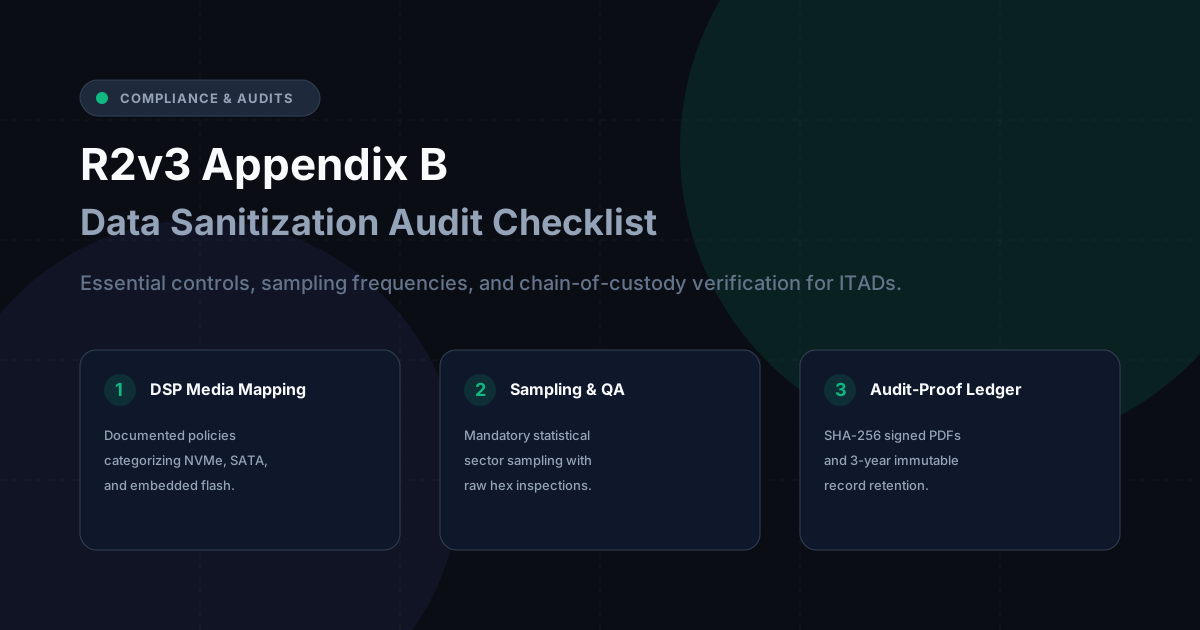
The R2v3 Appendix B Data Sanitization Audit Checklist for ITADs
A comprehensive compliance roadmap for electronics recyclers and ITAD facilities preparing for SERI R2v3 Appendix B data sanitization audits.
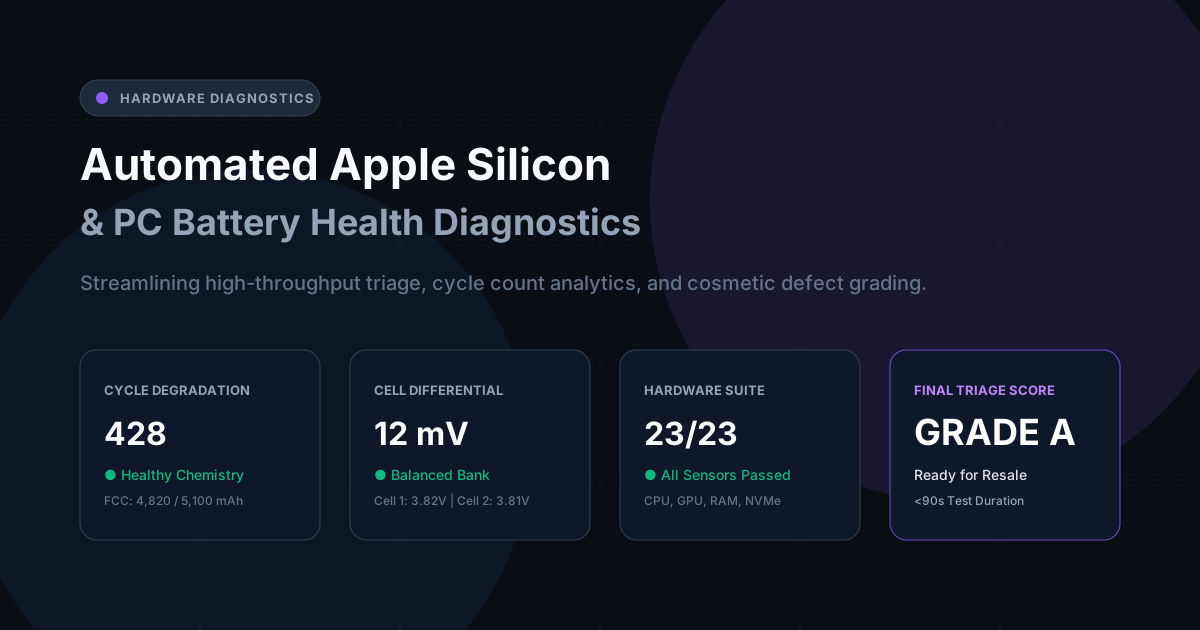
Automated Apple Silicon & PC Battery Health Diagnostics in Refurbishing Batches
How automated hardware diagnostics, cycle count tracking, and battery health degradation algorithms streamline triage for high-volume ITAD processors.
Stay Ahead in Data Sanitization & ITAD Compliance
Join enterprise IT managers and electronics refurbishers receiving our monthly technical standards breakdowns, NIST/R2v3 audit tips, and benchmark releases.