The Death of Blanket Certificates: Why 2026 Regulations Demand Serial-Level Immutable Verification
Why corporate risk teams and R2v3 auditors reject bulk destruction receipts. Learn how cryptographic SHA-256 signatures and serial tracking ensure audit immunity.
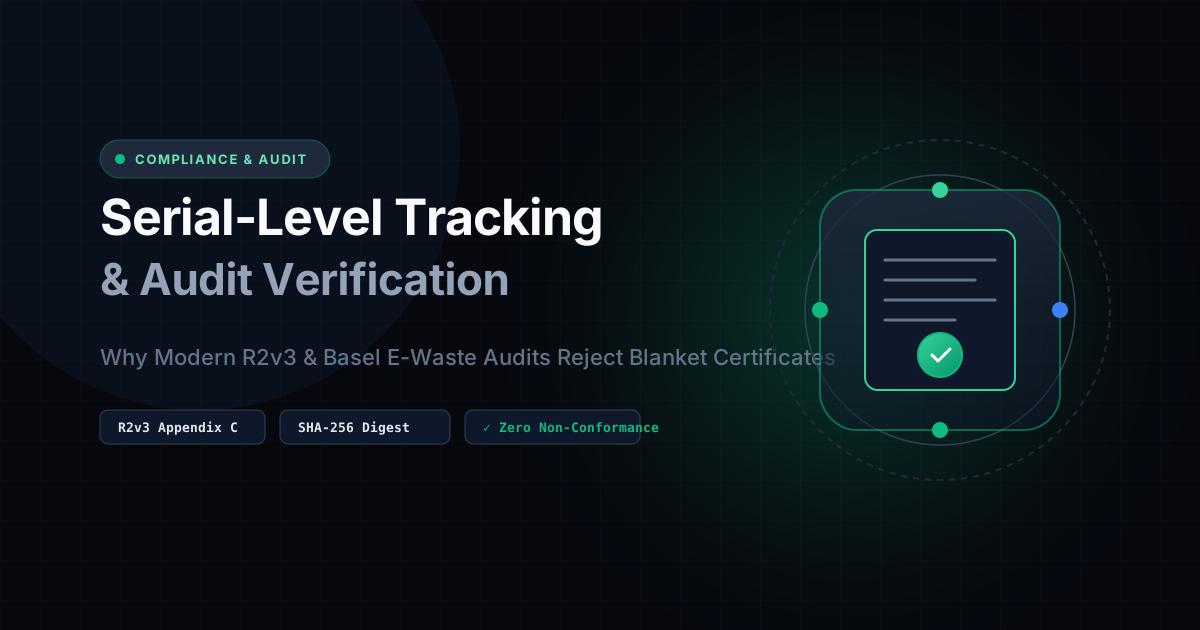
In enterprise risk management, the era of trust-based paper certificates has come to an end.
For years, many IT Asset Disposition (ITAD) facilities provided corporate clients with aggregate "Blanket Certificates of Destruction"—single-page summary receipts stating that "500 hard drives from Lot #4829 were sanitized on June 12th."
Under modern compliance regimes—including SERI R2v3 Appendix B & C, NAID AAA Certification, and the 2025 Basel Convention E-Waste Amendments—these generic aggregate summaries represent severe regulatory liabilities.
Enterprise risk officers and R2v3 auditors now mandate per-device, serial-level chain-of-custody documentation. Every storage device and motherboard must be individually accounted for from intake to sanitization, testing, and downstream transfer.
The Anatomy of an Auditor-Proof Sanitization Record
An enterprise-grade sanitization certificate must provide forensic immutability. If an asset is ever questioned during an audit or legal discovery, the documentation must independently prove compliance without relying on human memory.
| Certificate Section | Forensic Data Points Captured | Audit & Compliance Value |
|---|---|---|
| 1. Hardware Telemetry | Drive model, serial number, bus interface (NVMe/SATA/SAS), WWN, exact sector count, firmware revision | Proves physical asset identity beyond dispute |
| 2. Sanitization Standard | NIST SP 800-88 Rev 2 (Purge / Clear), IEEE 2883-2022, exact low-level command (Crypto Scramble, Block Erase) | Verifies regulatory standard alignment |
| 3. Verification Proof | Sector sampling depth (10% vs 100%), read-back pattern hash, bad block map, error count (0 errors) | Forensically proves data inaccessibility |
| 4. Cryptographic Seal | SHA-256 tamper-evident payload digest, UTC timestamp, cloud record UUID, digital signatures | Prevents PDF forgery or retrospective alteration |
Why Cryptographic Verification Matters
- Tamper Prevention: A standard PDF can be easily edited using common design software. reCore seals every record with an embedded SHA-256 cryptographic hash that can be independently validated via public API or QR verification code.
- Separation of Duties: Modern compliance frameworks require distinct authorization between the technician executing the wipe and the supervisor signing off on release.
- Automated Cloud Sync: Records generated on offline test benches automatically queue and sync to the cloud management console upon reconnecting, eliminating spreadsheet data entry errors.
Summary
In 2026, compliance is not defined by promises—it is defined by cryptographic proof. Facilities that deliver instant, serialized, tamper-proof reporting win high-value enterprise contracts and pass audits with zero non-conformances.
reCore Research Lab
OfficialCompliance & Security Group
Technical research group specializing in NIST SP 800-88, IEEE 2883, SERI R2v3 standards, and forensic data recovery testing.
Automate Testing & Evidence for R2v3 Operations
Deploy reCore across hundreds of devices simultaneously with zero-touch PXE or USB boot. Generate SHA-256 verified PDF erasure certificates with separation of duties enforcement.
Related Guides & Research
Continue exploring compliance standards, firmware sanitization, and hardware diagnostics.
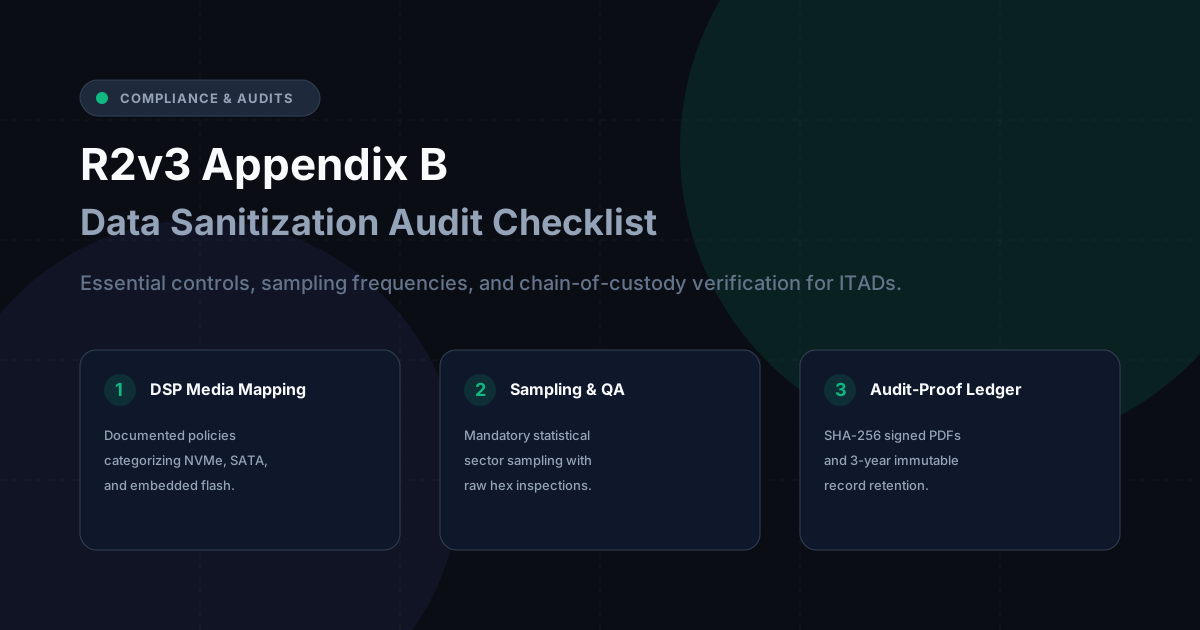
The R2v3 Appendix B Data Sanitization Audit Checklist for ITADs
Prepare for your SERI R2v3 Appendix B audit. Learn the 5% independent QA sampling rule, separation of duties, and 3-year record retention mandates.
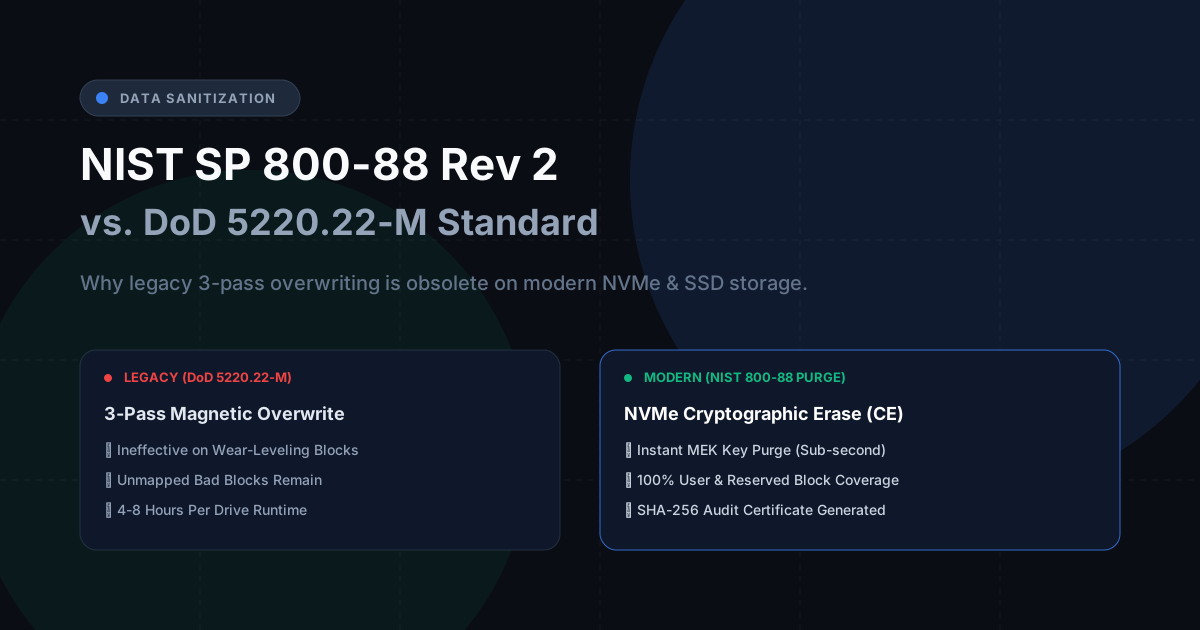
NIST SP 800-88 Rev 2 vs. DoD 5220.22-M: Modern SSD Sanitization Guide
Stop multi-pass overwriting on SSDs. Discover why DoD 5220.22-M fails on wear leveling and how NIST SP 800-88 Rev 2 Purge & Crypto Erase pass ITAD audits.
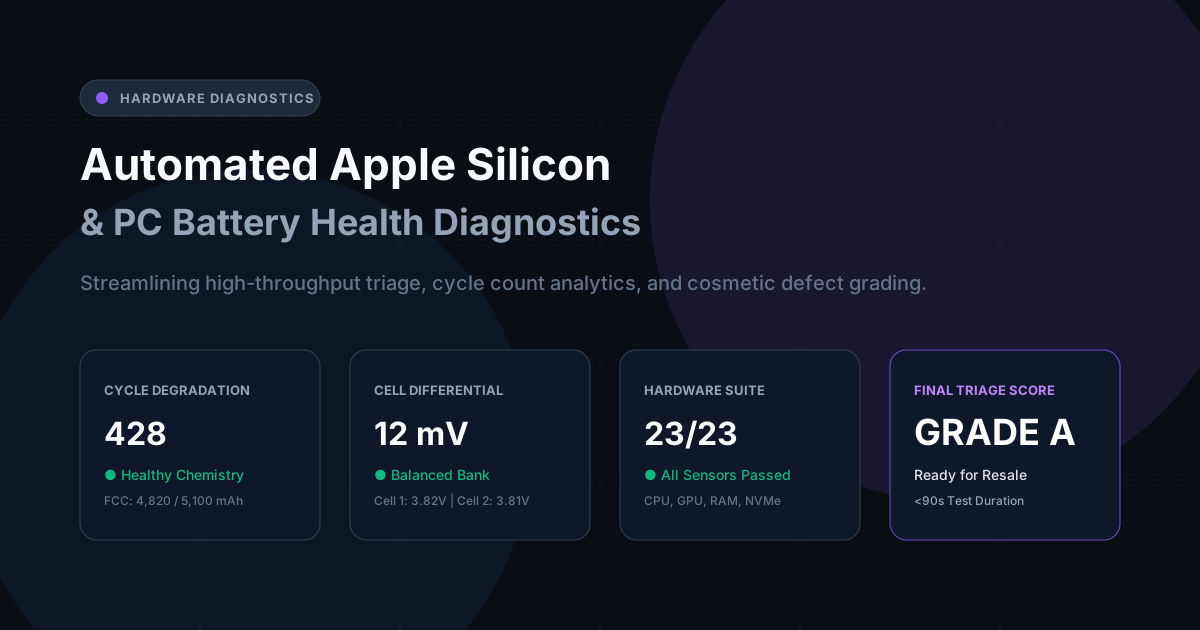
Automated Apple Silicon & PC Battery Health Diagnostics in Refurbishing Batches
How automated hardware diagnostics, cycle count tracking, and battery health degradation algorithms streamline triage for high-volume ITAD processors.
Stay Ahead in Data Sanitization & ITAD Compliance
Join enterprise IT managers and electronics refurbishers receiving our monthly technical standards breakdowns, NIST/R2v3 audit tips, and benchmark releases.