The 18-Month AI Server Lifecycle: Why GPU Cluster Decommissioning Demands a New ITAD Playbook
With accelerated compute lifecycles compressed to 18-36 months, GPU nodes lose 40% of value in 60 days. Learn modern NVMe 2.0 sanitization and thermal triage.
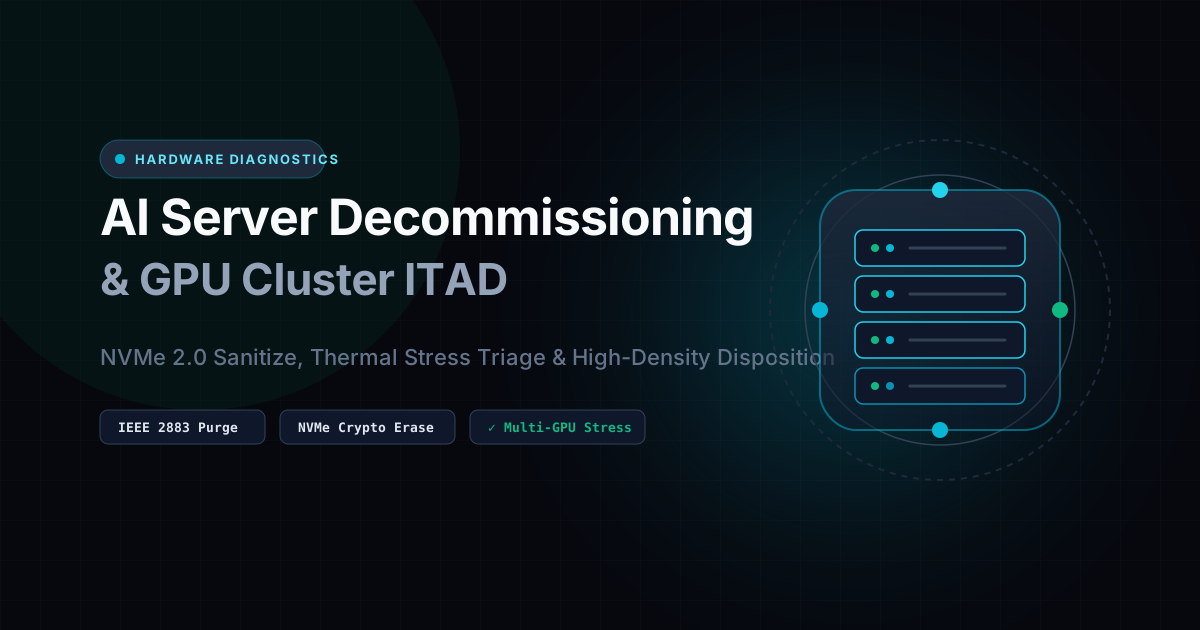
The hyperscale deployment of artificial intelligence compute clusters has rewritten the operational physics of data centers—and with it, the fundamentals of IT Asset Disposition (ITAD).
Where enterprise CPU servers traditionally operated on 4-to-6-year lifecycle replacements, accelerated GPU infrastructure is being decommissioned on compressed 18-to-36-month refresh cycles.
Accelerated computing hardware is subject to extreme market depreciation. Enterprise GPU nodes and dense accelerator cards can lose up to 40% of their recoverable secondary-market valuation within 60 days of being un-racked if processing is delayed by manual diagnostic backlogs.
Technical Challenges in Modern AI Hardware Disposition
Decommissioning AI servers presents distinct operational hurdles that legacy ITAD runbooks cannot handle:
1. Liquid Cooling & High-Density Thermal Stress
Modern AI servers operate at rack densities exceeding 40 kW to 100+ kW, relying on direct-to-chip liquid cooling or immersion loops. Triage testing requires automated thermal monitoring to detect micro-channel clogs, pump degradation, and thermal interface material (TIM) dry-out before re-racking or secondary sale.
2. High-Density NVMe Storage Sanitization
AI clusters ingest petabytes of high-throughput training data cached across PCIe Gen 5 NVMe SSDs. Traditional logical overwriting (writing zeroes sequentially) is ineffective on wear-leveled NAND and causes unnecessary flash endurance degradation.
Under IEEE Std 2883-2022 and NIST SP 800-88 Rev 2, ITAD operators must execute hardware-level controller commands:
- Cryptographic Erase (Crypto Scramble): Instantly renders all data permanently unrecoverable by destroying the internal Media Encryption Key (MEK) across addressable and over-provisioned blocks.
- Block Erase: Issues low-level electrical flash block resets across all NAND dies.
| Media & Component Type | Legacy Method (Deprecated) | Modern reCore Automated Standard |
|---|---|---|
| Enterprise NVMe Gen 4/Gen 5 | 3-Pass DoD 5220.22-M (Destroys NAND endurance) | IEEE 2883 Cryptographic Erase / Native Block Erase |
| GPU On-Board HBM/VRAM | ❌ None (Often overlooked security loophole) | Automated VRAM pattern purge & firmware state reset |
| Direct-to-Chip Liquid Loops | Manual pressure gauges | Thermal stress telemetry & delta-T monitoring |
| PCIe Switching Fabric | Manual OS boot check | Multi-lane PCIe Gen 5 bus link & error rate validation |
Maximizing Value Recovery with Automated Multi-GPU Diagnostics
To capture maximum value on secondary markets, ITAD operators must verify the integrity of compute accelerators beyond basic PCIe detection. reCore's automated engine validates:
- CUDA/OpenCL Tensor Math Stability: Verifies floating-point accuracy under sustained compute load.
- HBM/GDDR High-Bandwidth Memory Testing: Scans for parity errors and memory bus degradation.
- PCIe Bus Link Width & Speed Negotiation: Ensures full Gen 4/Gen 5 lane integrity without degradation.
Summary
AI server decommissioning is no longer a niche, end-of-quarter batch project—it is a continuous, high-throughput enterprise program. Facilities that automate high-density NVMe sanitization, thermal validation, and cryptographic certification will lead the $18B ITAD market transition.
reCore Research Lab
OfficialCompliance & Security Group
Technical research group specializing in NIST SP 800-88, IEEE 2883, SERI R2v3 standards, and forensic data recovery testing.
Automate Testing & Evidence for R2v3 Operations
Deploy reCore across hundreds of devices simultaneously with zero-touch PXE or USB boot. Generate SHA-256 verified PDF erasure certificates with separation of duties enforcement.
Related Guides & Research
Continue exploring compliance standards, firmware sanitization, and hardware diagnostics.
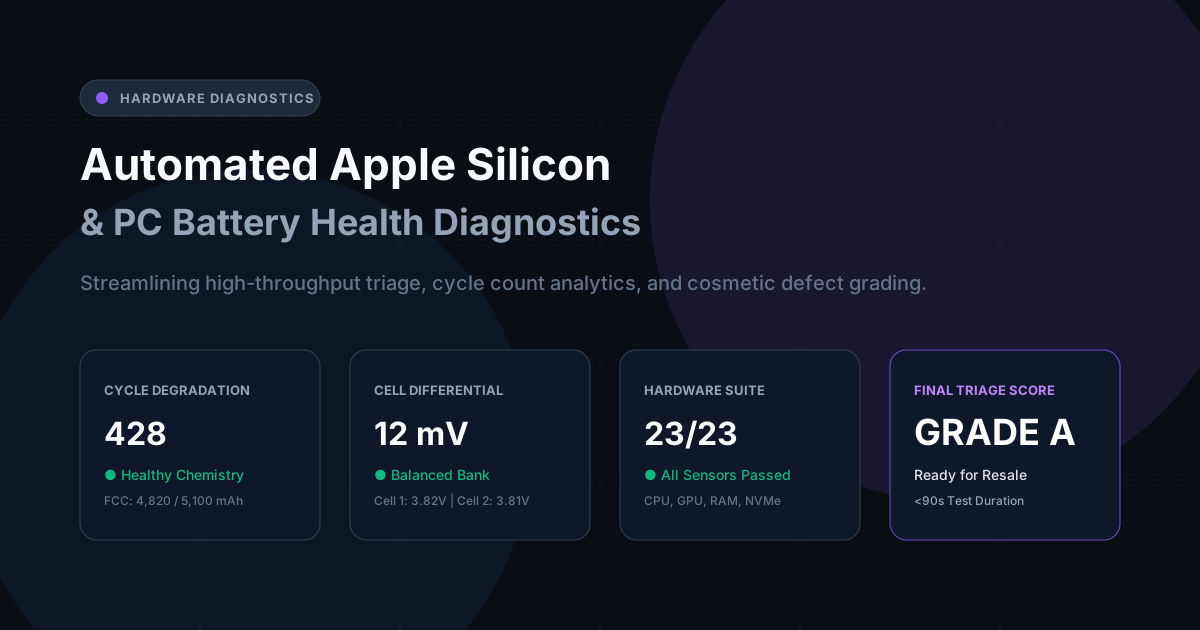
Automated Apple Silicon & PC Battery Health Diagnostics in Refurbishing Batches
How automated hardware diagnostics, cycle count tracking, and battery health degradation algorithms streamline triage for high-volume ITAD processors.
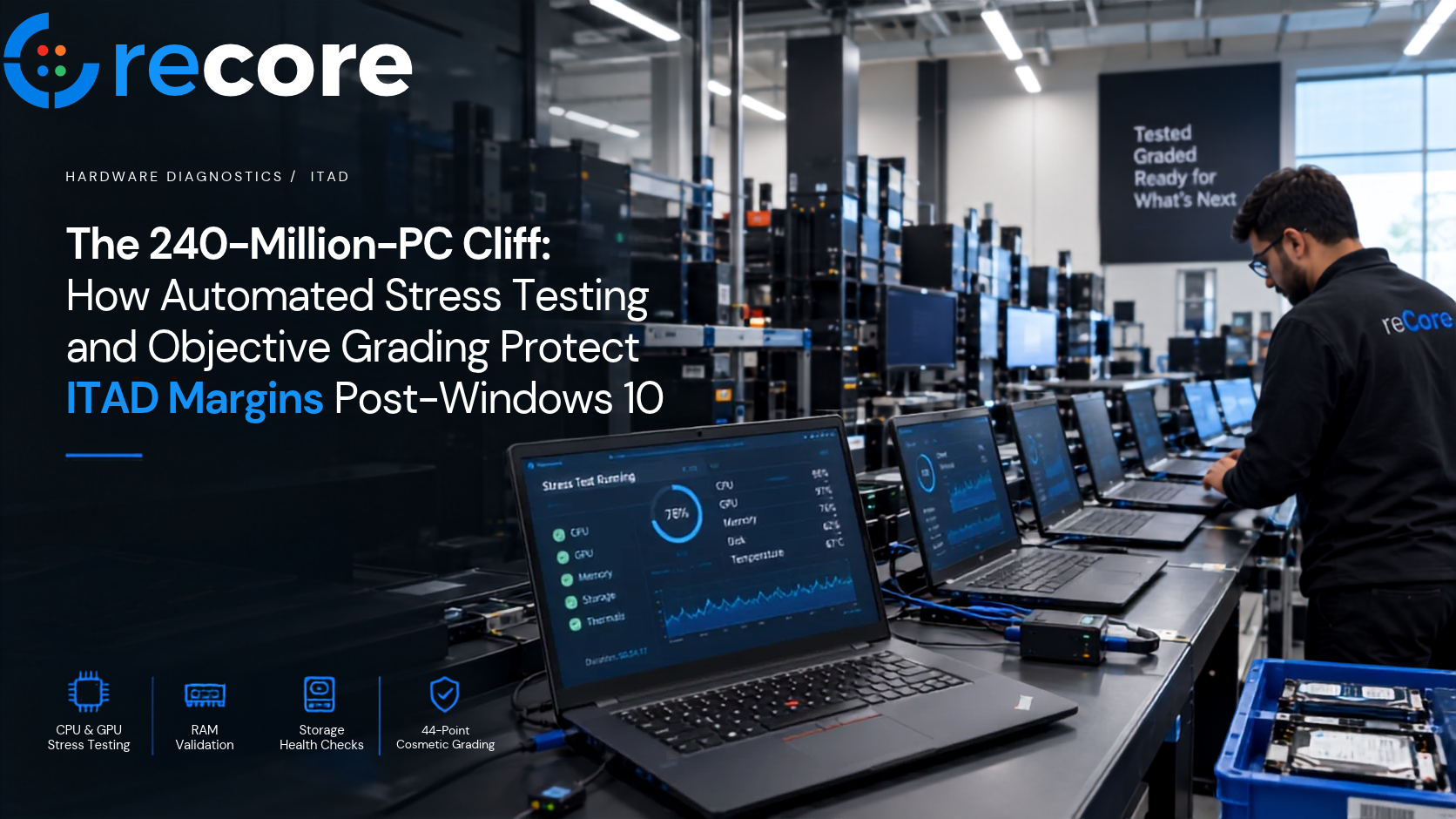
The 240-Million-PC Transition: How Automated Hardware Testing and Objective Grading Protect ITAD Margins Post-Windows 10
Windows 10 EOL is driving a major PC refresh wave. Learn how ITADs can use automated diagnostics, stress testing, data sanitization and objective grading to process more devices and protect resale margins.
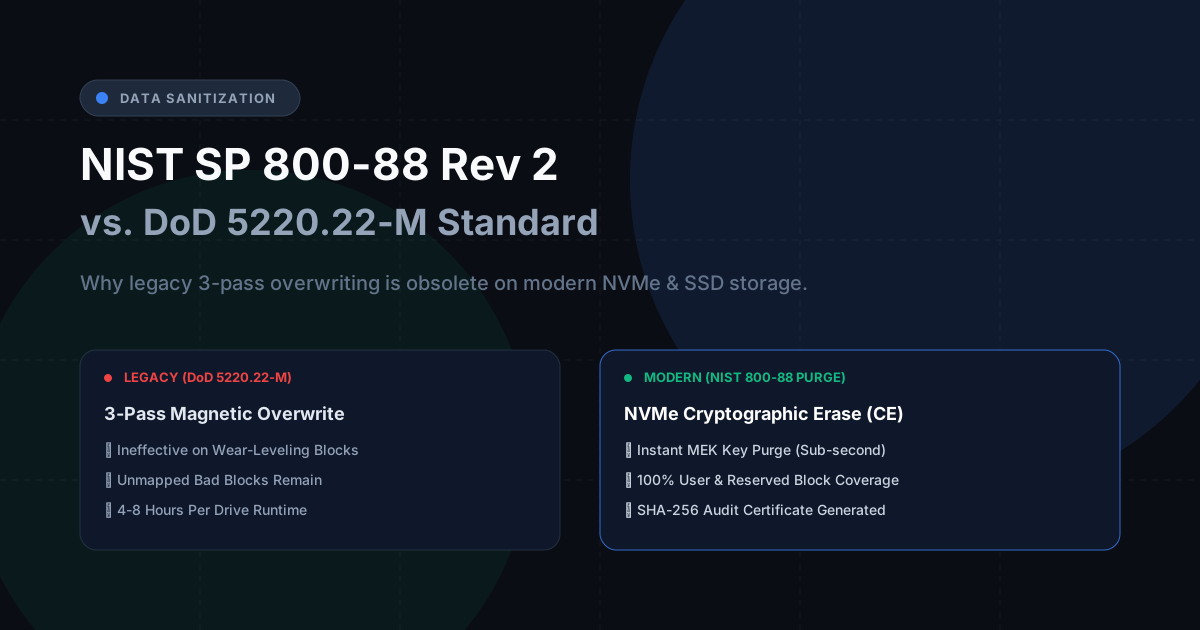
NIST SP 800-88 Rev 2 vs. DoD 5220.22-M: Modern SSD Sanitization Guide
Stop multi-pass overwriting on SSDs. Discover why DoD 5220.22-M fails on wear leveling and how NIST SP 800-88 Rev 2 Purge & Crypto Erase pass ITAD audits.
Stay Ahead in Data Sanitization & ITAD Compliance
Join enterprise IT managers and electronics refurbishers receiving our monthly technical standards breakdowns, NIST/R2v3 audit tips, and benchmark releases.